

What Nintendo Can Teach the Church
Christmas 1988. My brother Taylor and I receive the Nintendo Entertainment System packaged with Super Mario Bros. and Duck Hunt and we have been fans ever since. We have grown up with the Japanese company’s gaming systems; the adventures of Mario, Luigi, Yoshi, Link, Zelda, Donkey and Diddy Kong, and more have been a consistent presence in our lives. Even though we are in three different states now as adults, Taylor, my sister Shari, myself, and our kids will get together every so often and play Mario Kart online. We love Nintendo, which is a weird thing to say about a corporation that makes a billion dollars but it is what it is.
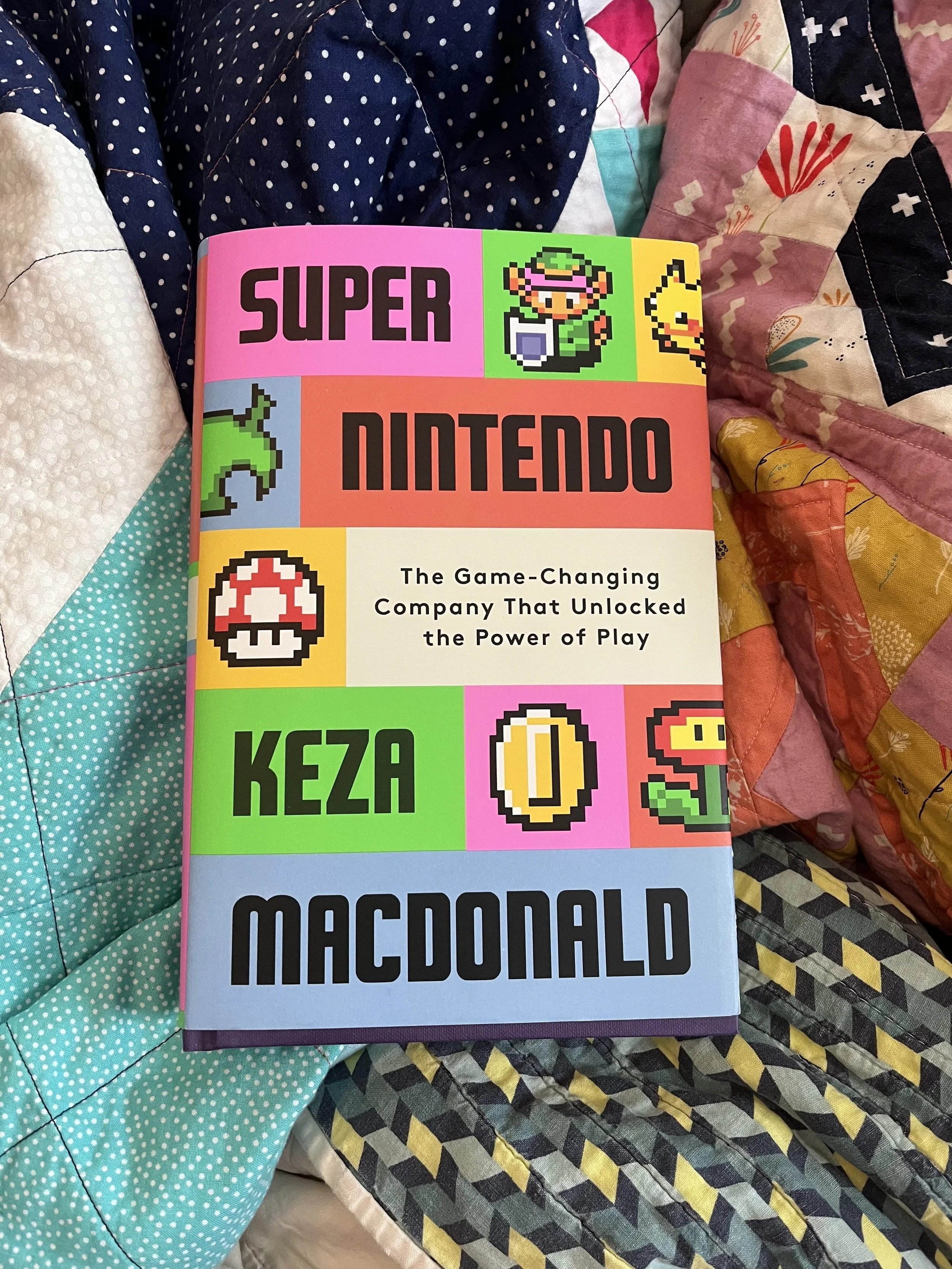
With all that said, I loved the Keza MacDonald’s book Super Nintendo: The Game-Changing Company That Unlocked the Power of Play. Not only is it an engaging journey through video game history through the lens of Nintendo’s iconic (and less iconic) franchises, but the book also has a great deal to say about creativity, community, and culture. In fact, it is that last idea that got me thinking about how this video game company can teach the church (or any other organization) even as I am a bit of an outsider to that world presently.
Here is one of two quotes that jumped out at me from the chapter “Splatoon” which looks at how Nintendo continues innovate and create over 40 years into its video game endeavors:
From Animal Crossing to modern Mario, Nintendo pairs its most experienced developers—those who are now in their sixties and seventies—with younger talent….everybody gets a say. Instead of employing younger developers who do what they are told, every member of the development team, including the most junior, builds up robust experience of generating their own ideas—and having them rejected. “Come to think about it,” says [Shinya] Takahashi, “when we notice that only the senior male members are gathering together to discuss what to do, sooner or later one of us says, ‘Hang on, we need to get some younger people in for an opinion on this…’”
It is so important to give a voice to every generation. This open table posture is so important to me as someone who used to work with youth. If the church wants a future then it is important that young people are not simply relegated to being tomorrow’s leaders. They do not need to be in their own silo and only brought out to the larger congregation a few times a year.
Studies out of the Institute of Youth Ministry at Princeton Theological Seminary have shown that teenagers that participate in inter-generational worship and connect with all demographics are more likely to continue to stay in church as adults. This helps students to mature in their faith. Also, their presence and voice being heard allows for innovation and important perspective to be part of the congregational conversation. I could honestly go down an enormous rabbit hole on this topic. Suffice to say, like Nintendo, the church ought to have every generation working together.
On the next quote which is in a similar spirit:
Nintendo’s habit of hiring people with different specialties—programmers, artists, industrial designers—and from different backgrounds goes right back to Gunpei Yokoi, who would put artists on game design projects precisely because they would know what wasn’t possible. “It’s not just about which generation they’ve grown up in, but what they’ve grown up with, where they come from, what are their interests,” [Hisashi] Nogami reckons. “The things that people come up with would be different if they’re really into sports, or loved reading books all the time….What’s really great about working at Nintendo is that you have all these people from different generations and backgrounds sharing ideas.”
I wrote earlier about not knowing where our family’s journey with church is going to take us, but I do know that I would really love to be part of a community made up of people from different generations and backgrounds sharing ideas.
While reading this book, I have also been reading Braving the Truth which is a collection of essays by Rachel Held Evans. I have been struck repeatedly by her desire to welcome everyone to the table of Christ, especially those that the church has traditionally marginalized: women, people of color, LGBTQ+ individuals, and more. Not just to let them be part of things and say, “Look how diverse we are” but to listen and learn from them. The church becomes a much more vibrant and life-giving place when we are hearing from more than just straight white guys (says the straight white guy).
How might we better respond to a world in need if we listened to more than just people like us? How might worship engage more people if folks with different backgrounds and interests helped build what we do when we gather? Of course, when one sets out to do this—to invite everyone to the table and change up how things have always been—it becomes exponentially more difficult. There is a lot of opportunity for misunderstanding or conflict or failure. But there is a great deal of fertile soil in those difficulties.
I acknowledge that all of this is more easily said than done. But I sure would love to see churches try (and I know there are those out there that do). One more quote from longtime Nintendo president Satoru Iwata who passed away from cancer a little over a decade ago: “Speaking personally, I think nothing is more hazardous than staying the course…staying the course means not having a future. If you maintain the status quo, you wind up fighting for survival…” May our churches find ways to risk, include, and blaze a new course.
I believe that most of us experience an internal tug-of-war between the past and the future. In The Screwtape Letters, C.S. Lewis’ titular demon supervisor advises his underling Wormwood that one of best ways to keep a human from doing good is to keep them ping-ponging between those two times that are not the present. One keeps trying to recapture or reach towards moments that are mist. It can keep a person from doing something.
The quote above resonates with me because it harnesses the past and unfinished future into a catalyst that animates our present. We remember the life, death, and resurrection of Jesus because it means something today and compels us to presently work for the Good that is already here, but also not yet. We remember the hope and pain of the past to do something that help us take some sort of step each and every day. We realize that the hope which exists within the gospel story is not yet fully realized. Many people are still being left behind and forgotten. The realization, as the theologian Metz states, puts pressure and questions on the present.