
Wake Up Dead Man (or What Would Jud Do?)
I don’t know if I can say enough good things about Wake Up Dead Man. Yes, it is another twisty Knives Out mystery with Rian Johnson and his stellar cast taking the series in a darker, more gothic direction. This whodunnit—set in a remote parish in upstate New York—is particularly in my wheelhouse because it creates the space for this to be a story about faith and skepticism.
Far from being a didactic, both sides are given virtuous, fully drawn characters which allows the film to be a genuine conversation between the ideas. Wake Up Dead Man also delves into the ways in which faith is twisted by fear, power, and the love of wealth into something that can cripple personal lives and poison communities on a larger scale. It is entertaining, mysterious, funny, and takes seriously grace, forgiveness, calling, and doubt.
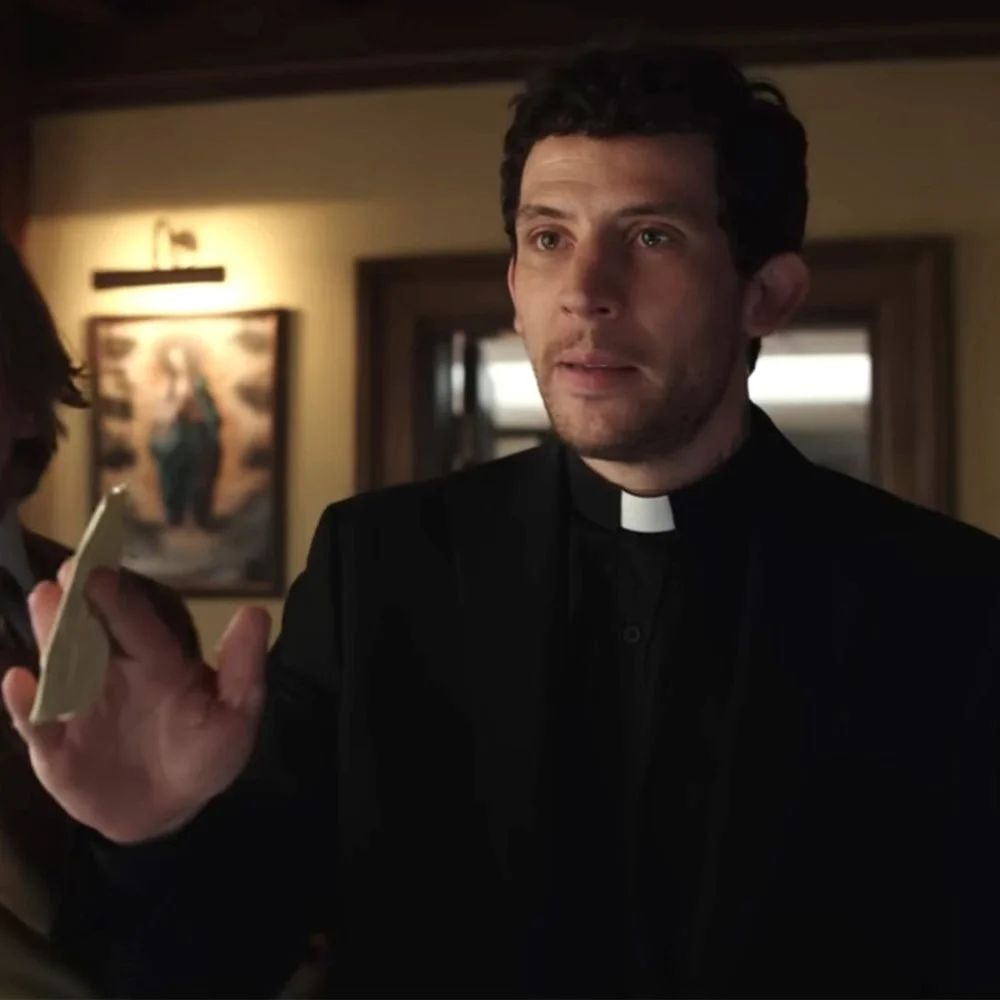
Yet a couple of days after watching the film with my family, what lingers with me most is a particular scene about midway through the movie. I will try to tiptoe around spoilers as I provide some context. Detective Benoit Blanc (played by series mainstay Daniel Craig) and a young priest named Jud Duplenticy (an excellent Josh O’Connor) have teamed up to figure out a seemingly impossible crime for which Jud is a person of interest. After some dead ends and red herrings, Jud is on the phone with a woman named Louise who can potentially provide some information that could break open the case. Louise simply needs to get in touch with a co-worker who took the message for which Jud and Blanc are searching.
As the call winds down, Jud tries to hurry off the phone and runs through several attempts by Louise to continue the conversation. Frustration begins to mount on the faces of both detective and priest. Ready to hang up, Jud hears a break in Louise’s voice and she asks if he can pray for her. Louise’s mother is in hospice and the illness impacts her mood and memory. Through obvious heartache, Louise admits that she does not always handle her mother’s behavior well and confesses she said things that she regrets. Now the mother is hesitant to talk with her daughter and Louise fears this argument will be the last conversation they’ll have.
The entire movie stops. The frantic search for clues and the clockwork mechanics of the crime grind to a halt, as Jud steps into another room to continue the conversation with Louise. Blanc is vexed and cannot understand why the priest is getting sidetracked by this stranger. We cut forward to the detective still sitting him by himself in an office. It is now visibly dark outside. In a huff, Blanc opens the door to the other room and witnesses Jud praying for the woman while she is still on the phone. Louise expresses deep gratitude to the priest for his time and Jud lets her know that he is a call away if she needs anything. After they hang up, Blanc upbraids Jud for eating up so much time when it is of the essence. But the service to Louise is like breathing for Jud. It’s what he is supposed to do. It’s what he wants to do.
I found myself wiping tears out of my eyes after that scene. There was a sincerity and earnestness to the scene that touched a raw nerve. Even later in the movie, our youngest son remarked that he wished he had a pastor like Jud. The priest was real, flawed, warm, welcoming, and obviously cared for the people around him; even those who were unkind. It is a posture that I wish all Christians would be known for; not just the leaders of churches but every person who says they try to follow Jesus.
It’s a reminder to me during this busy season—and I am passing this reminder on to you—that one of the best things that we can do is stop and be a compassionate presence to those who cross our way.