


This is a story about Assisi and Alabama.
They say that Francis of Assisi was so in love with God that he would stop and preach the gospel to the birds. I have always loved that image. In fact, there is an icon depicting this scene that hangs on the wall next to my bed. It shows an individual who is so God-intoxicated—to borrow a phrase from Martin Luther King, Jr.—that he wants to every creature to hear about the wondrous love that has captured him.
When John Lewis was a child, he apparently ministered in a similar way. Before he sought to make his life an instrument of peace during the civil rights movement, Lewis was the son of sharecroppers in the Deep South. On the farm, he would preach to the chickens. They were his congregation. He presided over their marriages, gave eulogies at their funerals, and baptized them.
What I love in those two pictures is the profound love of God and of God’s creation. They show individuals who see the world as an audience for the transforming love of God. Francis embodied the credo of preaching the gospel at all times even when words are not used. Though his childhood nickname was “Preacher,” Rep. Lewis did not serve in that vocation as an adult. But he preached. He put his life on the line believing that God’s love and justice was for all from birds to the people terrorized by a sinful system.



I believe that most of us experience an internal tug-of-war between the past and the future. In The Screwtape Letters, C.S. Lewis’ titular demon supervisor advises his underling Wormwood that one of best ways to keep a human from doing good is to keep them ping-ponging between those two times that are not the present. One keeps trying to recapture or reach towards moments that are mist. It can keep a person from doing something.
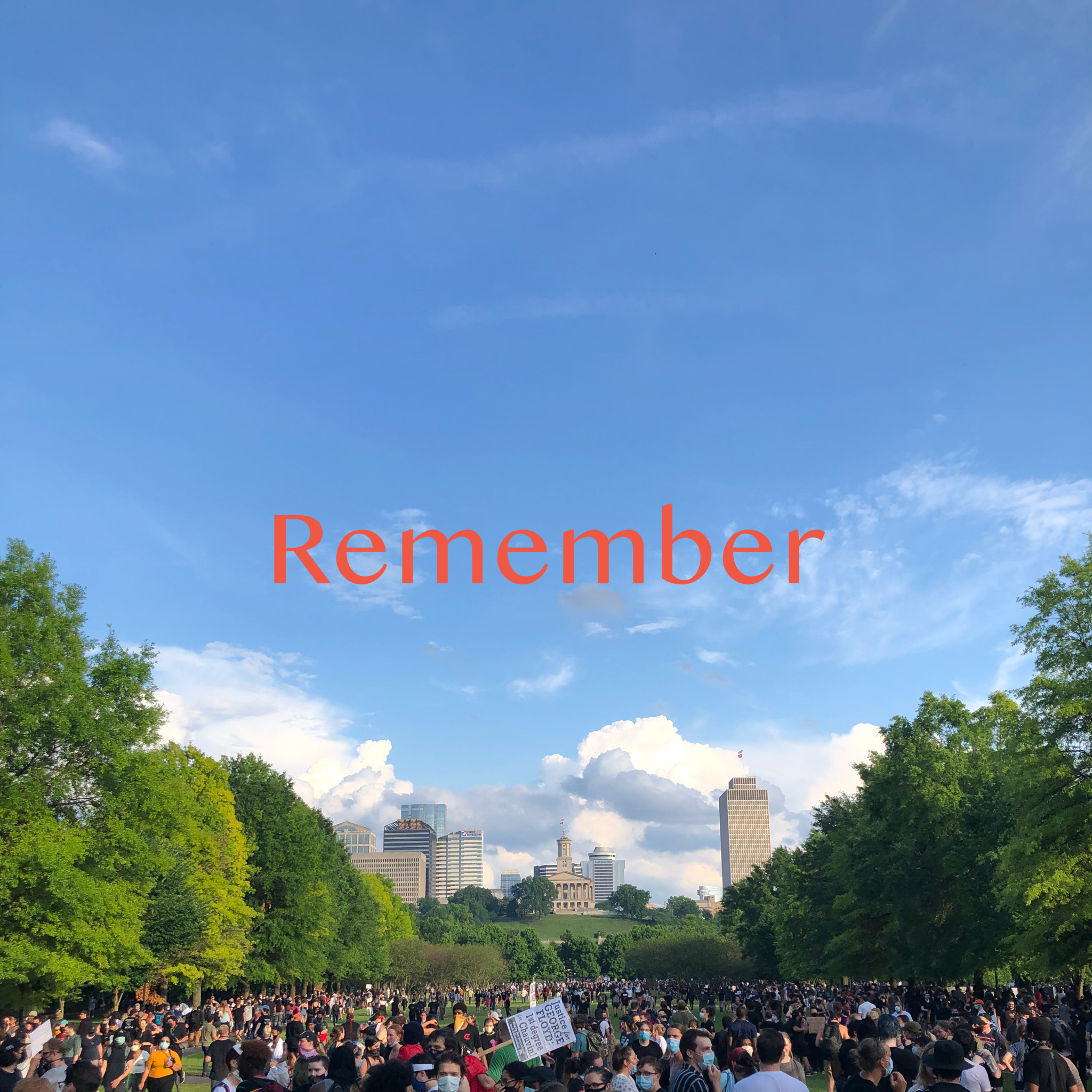
The quote above resonates with me because it harnesses the past and unfinished future into a catalyst that animates our present. We remember the life, death, and resurrection of Jesus because it means something today and compels us to presently work for the Good that is already here, but also not yet. We remember the hope and pain of the past to do something that help us take some sort of step each and every day. We realize that the hope which exists within the gospel story is not yet fully realized. Many people are still being left behind and forgotten. The realization, as the theologian Metz states, puts pressure and questions on the present.