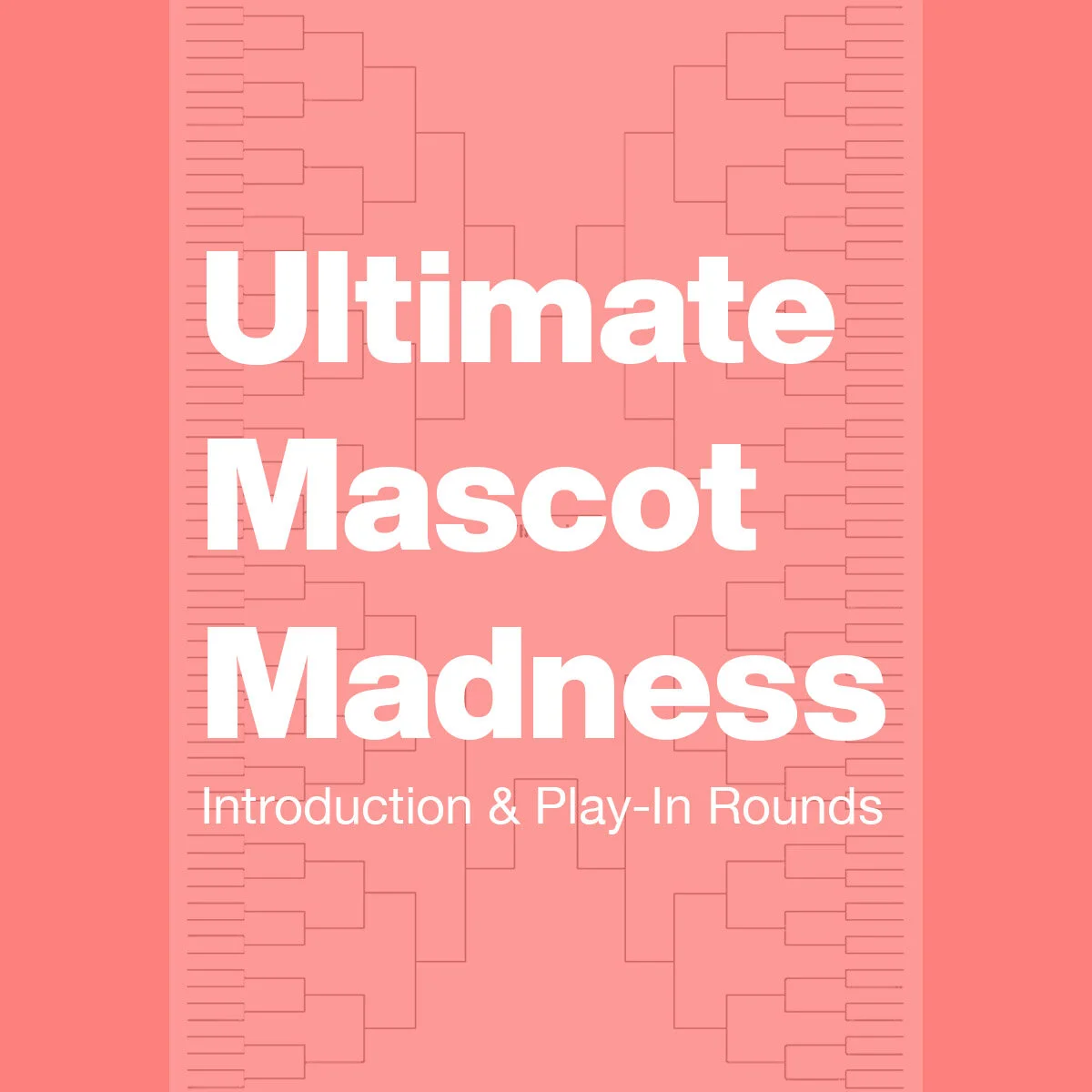
Every year, I fill out the NCAA Division I Men’s Basketball Tournament bracket using one simple criterion: Which mascot would win in a fight? When March Madness was cancelled this year, I had resigned myself to not exploring these critical questions. But as I have read stories of perseverance in the face of the Covid-19 pandemic, I decided that I too should not let circumstances get in the way of this of this treasured tradition. In fact, it is time to take it to the next level. So I decided to look at all of Division I and determine which mascot would be the ultimate champion.
Below are the ground rules for how I set up the bracket:
I compiled a list of the 142 unique Division I mascots. Sorry, Bulldogs, Eagles, and Tigers. You need to find more original nicknames. This list does not include mascots based on Native American imagery nor does it include the Sam Houston State Bearkats. Yeah, you’re the only Bearkats, but taking the common mascot Bearcats and misspelling it with a “k” does not get you into this prestigious tournament.
I approximately divided those 142 schools into four geographic regions: South, East, Midwest, and West.
I used the final posted RPI rankings to seed those teams within their respective regions. The Oregon Ducks have the highest RPI ranking in the West Region and thus are the #1 seed for that group.
Because you have to do some finagling to make a 142-team bracket work, each Region has a play-in tournament consisting of the remaining teams that were seeded #32 or lower in each geographic region. To make the tournaments as even as possible, the teams do not adhere to any geographic boundaries. That’s why Cornell is in the West Play-in. Sorry, Andy Bernard, your team should have played better basketball this season.
Again, the simple question is which mascot would win in a fight. This is considered a one-on-one fight unless plurality is implied by something other than slapping the letter “s” on the end. Thus the Marshall Thundering Herd get to bring more than one buffalo to the fight.
“Extensive” internet research is used to determine the intended nature of each mascot and their prowess in battle.



I believe that most of us experience an internal tug-of-war between the past and the future. In The Screwtape Letters, C.S. Lewis’ titular demon supervisor advises his underling Wormwood that one of best ways to keep a human from doing good is to keep them ping-ponging between those two times that are not the present. One keeps trying to recapture or reach towards moments that are mist. It can keep a person from doing something.
The quote above resonates with me because it harnesses the past and unfinished future into a catalyst that animates our present. We remember the life, death, and resurrection of Jesus because it means something today and compels us to presently work for the Good that is already here, but also not yet. We remember the hope and pain of the past to do something that help us take some sort of step each and every day. We realize that the hope which exists within the gospel story is not yet fully realized. Many people are still being left behind and forgotten. The realization, as the theologian Metz states, puts pressure and questions on the present.