Dune
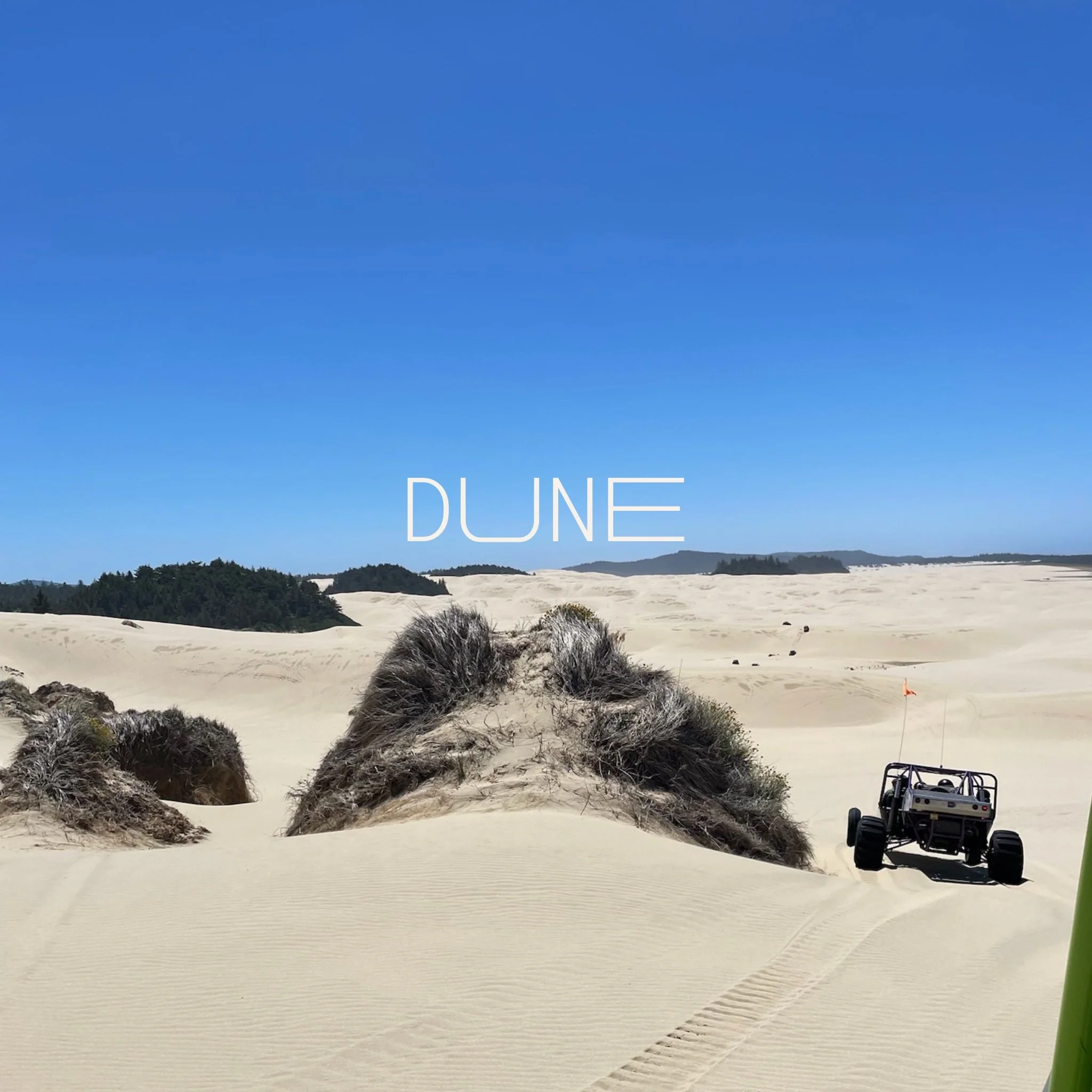
There are still parts of this country that I am just now learning about. These are places that are so fantastical that it seems like they feel like sprung up from the pages of science fiction. That is the Oregon Dunes National Recreation Area: 40 miles of otherworldly sand dunes on the Oregon coast that served as partial inspiration for Frank Herbert’s foundational sci-fi series Dune.
Formed by wind and water and tens of thousands years old, these dunes are huge (some can be up to 500 feet tall) and constantly changing (more on that in a bit). I caught my first glimpse of the dunes traveling up Highway 101 and gasped to the point that everyone else in the car thought something was very wrong. Nothing was wrong. It was just a mountain of sand that I had only seen accompanied by the acting of Zendaya and Timothée Chalamet; except this dune was looming behind a Dollar General.
So what does one do when they are in such a place? Of course, you marvel at its beauty and meditate on the stunning array of creation on this planet.
You also get someone to hurtle you around the dunes at 65 mph in a buggy with a roll cage.
We found a company called Sandland Tours that offered a variety of ventures out into the dunes. There was the milder tour recommended for those who are pregnant or have back problems. Then there was the more extreme tour that was offered over different time increments. We opted for a hour on the latter and, y’all, it was so much stinking fun.
The dune buggy could seat up to ten including the driver. There was a nice British couple that sat in the back seat. The four of us sat in the middle seat; the boys wearing required helmets and all of us sporting provided goggles. Then up front was our driver, Larry. We all loved Larry. He was the best.
Our squadron of buggies started off going through the sand trails that wound its way through a forest and then the scene opened up to this massive expanse of sand dunes dotted with tree islands. That’s when the fun really began. The dune buggy plunged down the sand mountains and back up. We twisted and turned through wind-molded valleys as sand sprayed in our face. It was like the longest and most fun roller coaster ever with brief informational stops about the history and ecology of the land.
(And to answer the question that the boys and I often ask on our podcast: Did you get sick? I never even got close. The constant rush of wind kept me refreshed.)
About midway through, we made our way down to the coast and had a lovely ride along the Pacific Ocean. Then we returned to DUNE and started the roller coaster anew. And it was new. After we climbed up a massive dune, Larry informed us that sand mountain did not exist the first time we went through the area. The wind is constantly eroding and rebuilding the topography in the area. No trip through the dunes is the same as the previous.
We finally arrived back where we began our adventure. We were completely sandblasted (each of us would be finding sand for days). The four of us piled out of the buggy and grabbed a picture with our new best friend, Larry. Then we got in the car to venture to our next destination. Yet one of our favorite stops on our whole trip was a place that we didn’t know existed just a few months before.
I believe that most of us experience an internal tug-of-war between the past and the future. In The Screwtape Letters, C.S. Lewis’ titular demon supervisor advises his underling Wormwood that one of best ways to keep a human from doing good is to keep them ping-ponging between those two times that are not the present. One keeps trying to recapture or reach towards moments that are mist. It can keep a person from doing something.
The quote above resonates with me because it harnesses the past and unfinished future into a catalyst that animates our present. We remember the life, death, and resurrection of Jesus because it means something today and compels us to presently work for the Good that is already here, but also not yet. We remember the hope and pain of the past to do something that help us take some sort of step each and every day. We realize that the hope which exists within the gospel story is not yet fully realized. Many people are still being left behind and forgotten. The realization, as the theologian Metz states, puts pressure and questions on the present.