


People and Saints
Today our family set off on a road trip for Spring Break. We ended up getting a later start than we wanted for a variety of reasons. This put me under some intense time pressure as I tried to make my way from Nashville to Memphis in the driving rain; hoping that I could safely arrive before our first destination closed for the day.
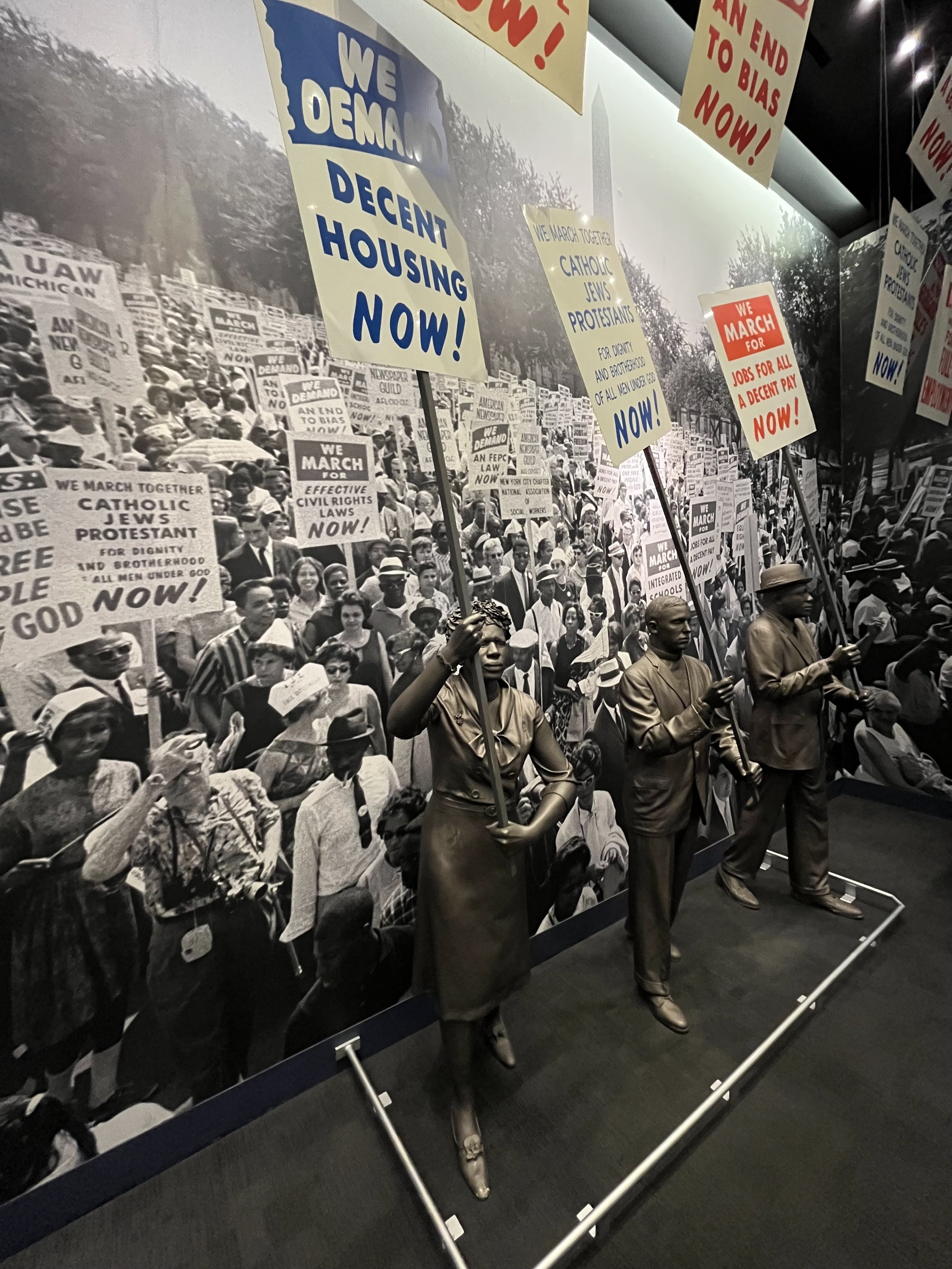
Thankfully, we made it to the National Civil Rights Museum just after 4 PM. When I bought our tickets, the woman at the counter asked me if I knew they closed at 5 o’clock. After I confirmed that I did, she asked if I would rather come back tomorrow. I politely explained that we were going through town and I would like for my sons to see whatever they could. She smiled and waved us along.
We took a whirlwind tour of the museum. But I got to sit in a replica of a Birmingham prison cell and explain to Jim and Liam why the letter Martin Luther King wrote there is so important to me personally and the American church at large. We got to talk about John Lewis, James Lawson, Diane Nash, and other Nashville students who sat at segregated lunch counters and non-violently endured hatred from onlookers. On the anniversary of Bloody Sunday, we watched footage of that terrible and critical day on the Edmund Pettus Bridge.
I am grateful for places like this museum where I can point and say to my boys, “Look. That is what a follower of Jesus looks like.”
I know that the women and men who made up the Civil Rights Movement were not perfect by any stretch of the imagination. But there is not a saint who walked this earth who was perfect. These were fallible people who did their very best to stand up for what was right. They were—to borrow one of King’s phrases from “Letter from a Birmingham Jail”—too God-intoxicated to be astronomically intimidated.
In a day and age where a president bemoans that the movement was bad for white people and we often relegate their stories to the shortest month of the year, I wish more folks would go to places like the National Civil Rights Museum. We need to see how ordinary people can do the holy thing. I’m grateful for the hour our family got to reflect on that today.

I believe that most of us experience an internal tug-of-war between the past and the future. In The Screwtape Letters, C.S. Lewis’ titular demon supervisor advises his underling Wormwood that one of best ways to keep a human from doing good is to keep them ping-ponging between those two times that are not the present. One keeps trying to recapture or reach towards moments that are mist. It can keep a person from doing something.
The quote above resonates with me because it harnesses the past and unfinished future into a catalyst that animates our present. We remember the life, death, and resurrection of Jesus because it means something today and compels us to presently work for the Good that is already here, but also not yet. We remember the hope and pain of the past to do something that help us take some sort of step each and every day. We realize that the hope which exists within the gospel story is not yet fully realized. Many people are still being left behind and forgotten. The realization, as the theologian Metz states, puts pressure and questions on the present.