
Blooming Broken Branches
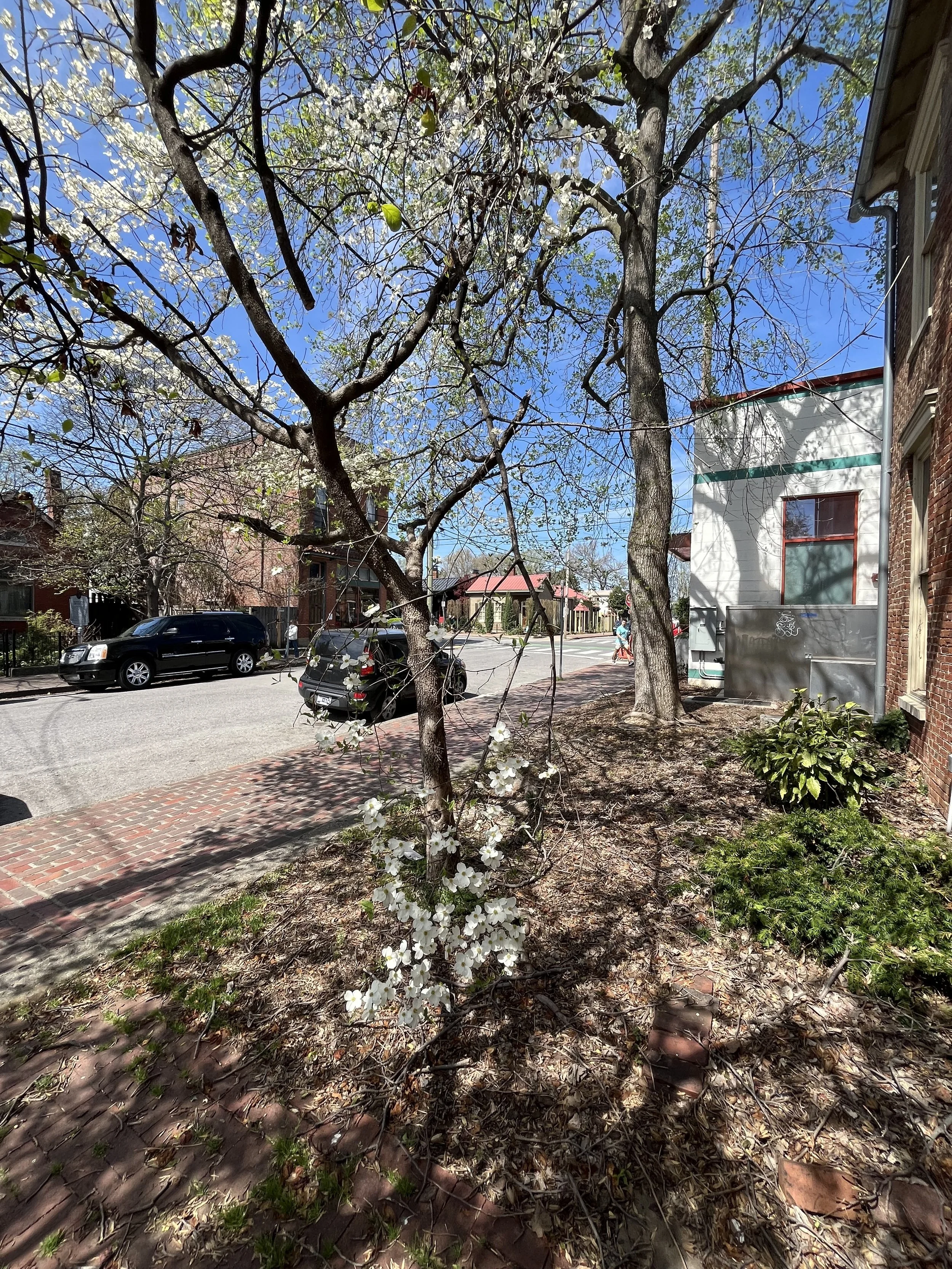
In front of our house there is a branch that is barely hanging on to its tree. The limb is a casualty of the ice storm that tore Nashville earlier this year. As we cleaned up the debris afterwards, we tried to tear it off the tree as we did with a few other broken branches out front. But this branch was more stubborn than the others. So even though it is hanging on by a thread and nearly perpendicular with the ground, it remains as a reminder of a storm.
Now that branch is in bloom. Still hanging on by a thread, still touching the ground but now with flowers and the buds of leaves. It was a surprise at first. We did not really expect that branch to still be alive as it was barely connected to its source. But it is very much alive and now a symbol of beautiful tenacity. Even though it looks askew, I cannot imagine trying to rip that branch from its tree and I don’t think my sons would let me if I wanted to.
I know that it is something little, but that blossoming limb makes me hope that something good might bloom in me even as I feel like I am sometimes only holding on by a thread. The world is a mess and we have reminders of various storms strewn across our lives. But where there might not seem to be any signs of life, there is still hope. May God cause something to blossom in those broken places of our lives and may we cultivate the good.
I believe that most of us experience an internal tug-of-war between the past and the future. In The Screwtape Letters, C.S. Lewis’ titular demon supervisor advises his underling Wormwood that one of best ways to keep a human from doing good is to keep them ping-ponging between those two times that are not the present. One keeps trying to recapture or reach towards moments that are mist. It can keep a person from doing something.
The quote above resonates with me because it harnesses the past and unfinished future into a catalyst that animates our present. We remember the life, death, and resurrection of Jesus because it means something today and compels us to presently work for the Good that is already here, but also not yet. We remember the hope and pain of the past to do something that help us take some sort of step each and every day. We realize that the hope which exists within the gospel story is not yet fully realized. Many people are still being left behind and forgotten. The realization, as the theologian Metz states, puts pressure and questions on the present.