Exodus 17:1-7
First Reading for the Eighteenth Sunday after Pentecost (Year A)
Today has been a good day in spite of also being a very heavy day, which means there is not much in the tank for Ye Olde Weekly Lectionary. So I simply have two thoughts that Rev. Sides shared this morning and the inevitable weird pop cultural direction my mind immediately went with one of those thoughts.
The passage today is about the people quarreling with Moses because there wasn’t water after last week the people quarreled with Moses because there wasn’t enough food. And this is kind of the carousel of regress that keeps the people wandering in the wilderness for forty years. It is very easy for us—centuries later and very comfortably removed from the narrative—to shake our heads. But that’s not exactly fair.
Rev. Sides shared an insight from a seminary professor that God will let people wander in the desert for forty years just so they can get their heads on straight. The sermon looked at this story from a perspective that I had not really thought about before: the fact that some of God’s best work takes time. Experiencing freedom and grace takes time. Growing into who God wants us to be takes time.
And, of course, the next thing I scribbled in my journal was the chorus to Jimmy Eat World’s 2001 hit “The Middle”:
It just takes some time
Little girl, you’re in the middle of the ride
Everything, Everything’ll be just fine
Everything, Everything’ll be alright, alright
So wherever you are, remember both this scripture passage and the words of St. James, Consumer of Planets. All of this takes some time and, as we try to seek the goodness of God, everything will be alright.
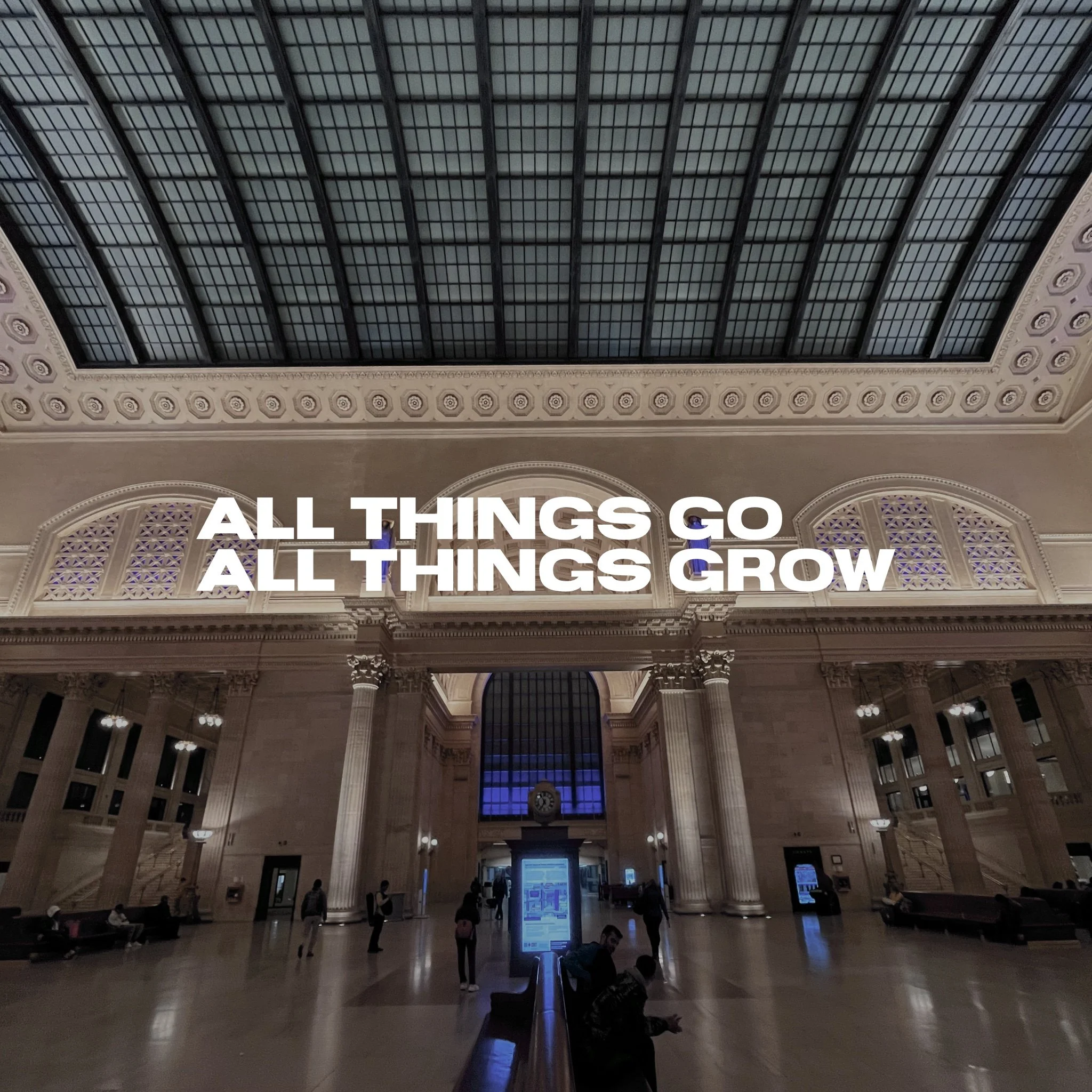

I believe that most of us experience an internal tug-of-war between the past and the future. In The Screwtape Letters, C.S. Lewis’ titular demon supervisor advises his underling Wormwood that one of best ways to keep a human from doing good is to keep them ping-ponging between those two times that are not the present. One keeps trying to recapture or reach towards moments that are mist. It can keep a person from doing something.
The quote above resonates with me because it harnesses the past and unfinished future into a catalyst that animates our present. We remember the life, death, and resurrection of Jesus because it means something today and compels us to presently work for the Good that is already here, but also not yet. We remember the hope and pain of the past to do something that help us take some sort of step each and every day. We realize that the hope which exists within the gospel story is not yet fully realized. Many people are still being left behind and forgotten. The realization, as the theologian Metz states, puts pressure and questions on the present.