Like Thomas I Want to See Something
John 20:19-31
Gospel Reading for the Second Sunday of Easter (Year A)
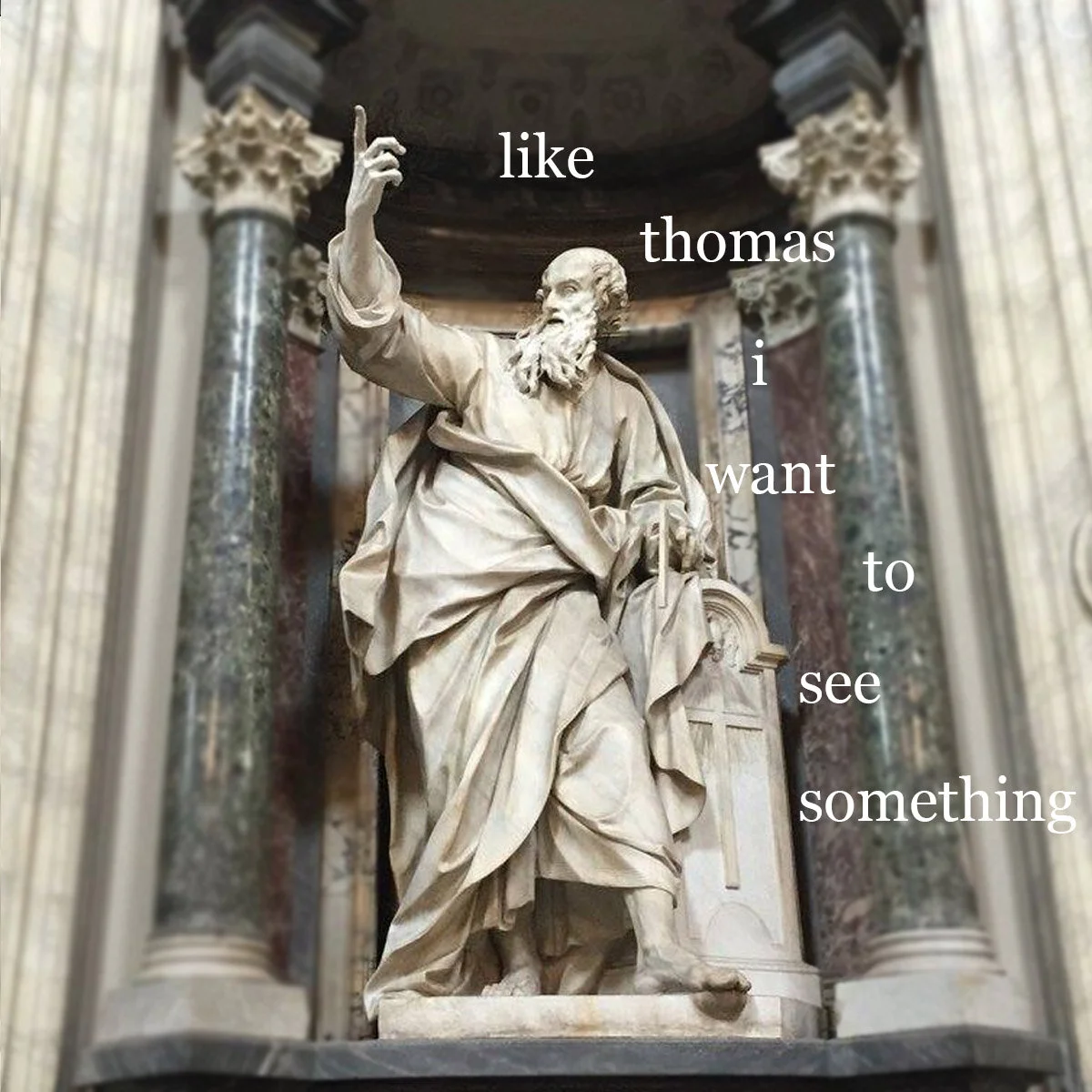
Like Thomas
I want to see something
That will make me believe
I have no need for nail-scarred hands
Nor wounded sides
Of a Savior back from the dead
But I want to see something
That will make me believe
Resurrection is possible
For I have my doubts
Not in the risen Christ
But in the rising rest of us
There’s a darkness I see
Inside myself
More often than I’d like
And I am tired
Of cruel avaricious kings
And their power-craving priests
I shut my eyes
Yet can still hear my homeland vanish
Along with what I thought it stood for
Like Thomas
I want to see something
That can help me unsee
The children at the end of a gun
The refugee locked in the cold
The needlessly sick drifting away
The child of God
Demonized for some part of their being
Of which they have no control
I want to know
That these pictures can change
And change can be in me
That the people
Who pray
And celebrate resurrection
Can be people
Who embody
And enact resurrection
For I doubt
Even as I believe
Because I have seen too much
Like Thomas
I want to see something
That will make me believe
I believe
I want to believe
Help my unbelief

I believe that most of us experience an internal tug-of-war between the past and the future. In The Screwtape Letters, C.S. Lewis’ titular demon supervisor advises his underling Wormwood that one of best ways to keep a human from doing good is to keep them ping-ponging between those two times that are not the present. One keeps trying to recapture or reach towards moments that are mist. It can keep a person from doing something.
The quote above resonates with me because it harnesses the past and unfinished future into a catalyst that animates our present. We remember the life, death, and resurrection of Jesus because it means something today and compels us to presently work for the Good that is already here, but also not yet. We remember the hope and pain of the past to do something that help us take some sort of step each and every day. We realize that the hope which exists within the gospel story is not yet fully realized. Many people are still being left behind and forgotten. The realization, as the theologian Metz states, puts pressure and questions on the present.