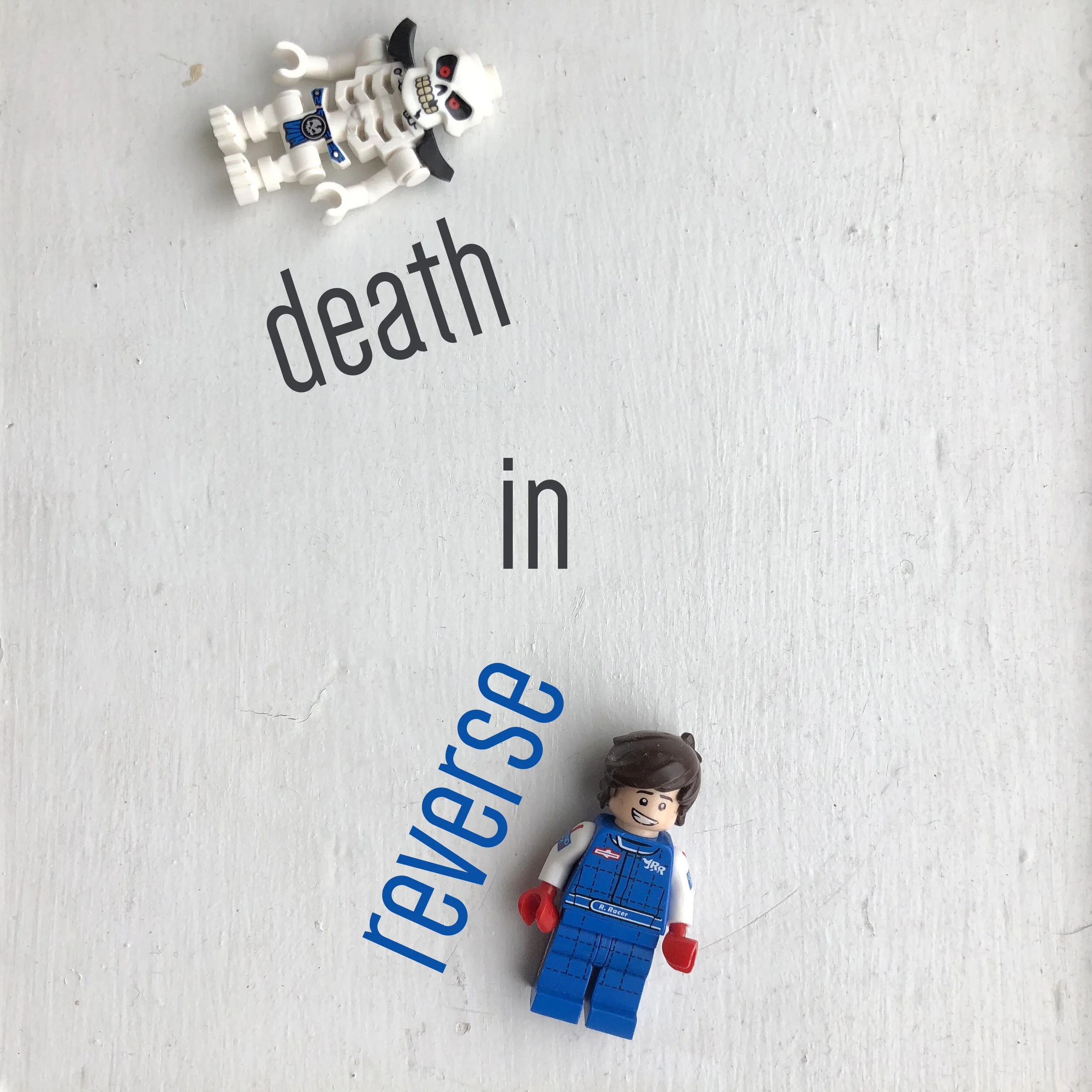
Death in Reverse
Ezekiel 37:1-14
First Reading for the Fifth Sunday in Lent (Year A)
“Death itself would start working backwards.”
From the moment when I read that line in The Lion, the Witch, and the Wardrobe, it has taken root in my imagination. There comes this point when you realize that a great deal of this world is in the throes of entropy. Everything that lives on this planet dies. Relationships drift and then fall apart. As a sensitive child, all fo this decay frightened me. I wanted something to help us escape all this gravity. And so C.S. Lewis’ regal God-lion reminded me of a concept that is essential to all of scripture: resurrection.
What fascinates me is not so much the idea of the resurrection of the dead. I believe that is part of this grand narrative; at least I do on most days. That is the concept to which a lot of the Christian faith pays attention. Rather it is the idea that God is in the art of taking the things that are falling apart, broken, dying, and decaying and throwing it into reverse. Death does not have the final word. There is always the chance for life.
That is the image that we see in Ezekiel. It starts with a valley full of bones and God asks the prophets whether they live can live again. Ezekiel wisely answers that only God knows whether resurrection is possible. Thus God orders Ezekiel to prophesy over the bones. To go out where there is seeming hopelessness and dead ends and to preach the word of the Lord. And what is that word?
I am about to put breath in you, and you will live again. I will put sinews on you, place flesh on you, and cover you with skin. When I put breath in you, and you come to life, you will know that I am the Lord.
Ezekiel does as he is asked and death begins to work backwards. The bones come together. Tendons and ligaments form and then skin covers over them all. God tells the prophet to speak again and when he does, breath and spirit enter into those bodies and they stand on their feet. Where once there was a lowland of dry bones there is now a valley bursting with life.
One of the encouraging things that has happened in the last few weeks is watching from a distance all the ways in which people have been fighting against the literal and metaphorical deaths that come with this pandemic. The way in which community ties have sprung up like sinews around bone. The videos of city-dwellers applauding medical workers, teachers on parade in neighborhoods, and living room concerts for a world hungry for human connection. All of this is death in reverse. It is all very much a piece of what Ezekiel saw in that valley and what Jesus preaches when he says the kingdom of heaven is near.
My hope is that we will not let this impulse to cheat the deaths around us diminish whenever the threat of this virus subsides. Community, love, life-saving, education, and more are all part of the work that God is doing in this world. They have been, are, and will always be happening. God is always inviting you and me to join in making death work backwards.


I believe that most of us experience an internal tug-of-war between the past and the future. In The Screwtape Letters, C.S. Lewis’ titular demon supervisor advises his underling Wormwood that one of best ways to keep a human from doing good is to keep them ping-ponging between those two times that are not the present. One keeps trying to recapture or reach towards moments that are mist. It can keep a person from doing something.
The quote above resonates with me because it harnesses the past and unfinished future into a catalyst that animates our present. We remember the life, death, and resurrection of Jesus because it means something today and compels us to presently work for the Good that is already here, but also not yet. We remember the hope and pain of the past to do something that help us take some sort of step each and every day. We realize that the hope which exists within the gospel story is not yet fully realized. Many people are still being left behind and forgotten. The realization, as the theologian Metz states, puts pressure and questions on the present.