Hope Like a Hurricane
Isaiah 64:1-9
First Reading for the First Sunday of Advent (Year B)
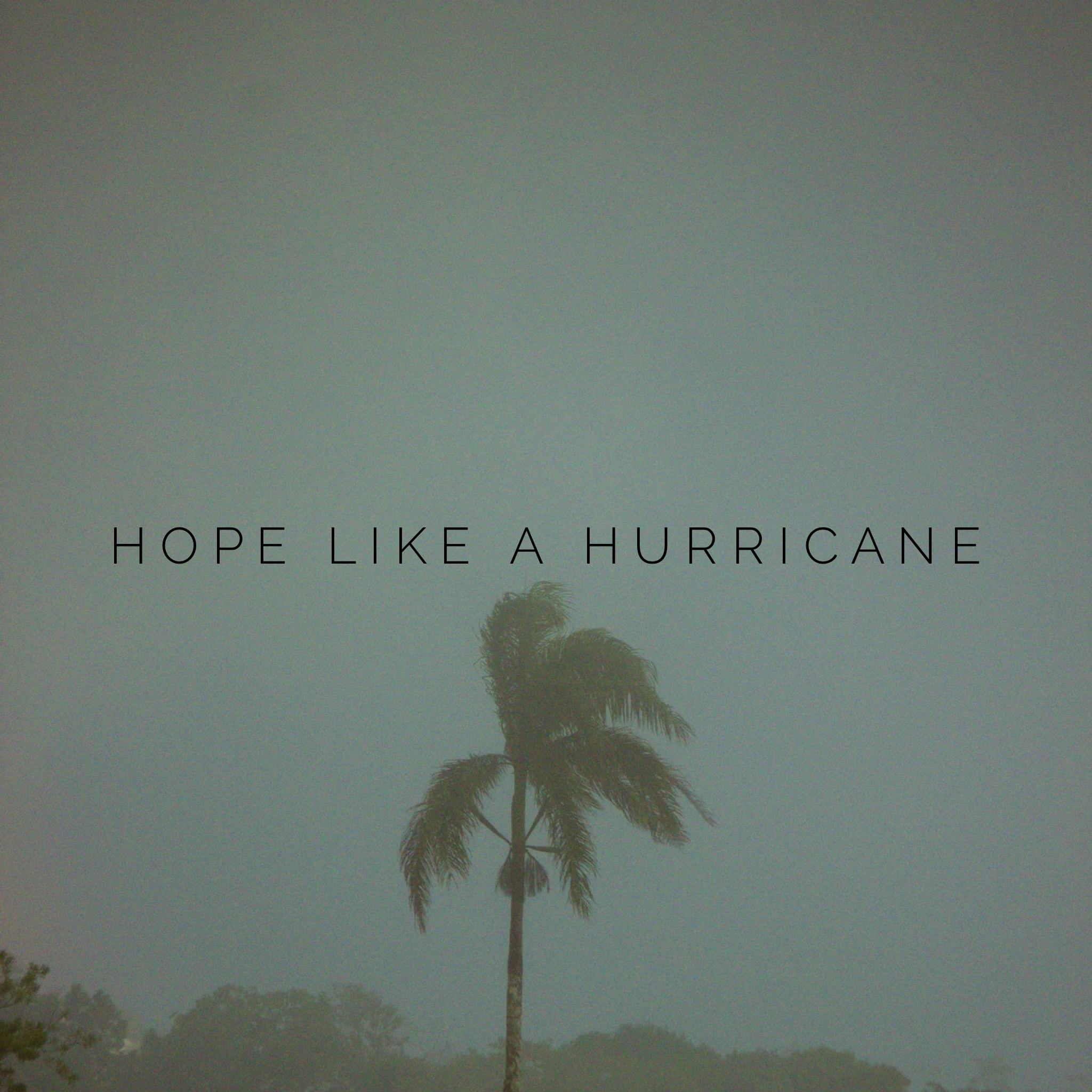
I was six years old when Hurricane Hugo tore through South Carolina. We lived in Columbia at the time and so we were spared the storm’s full wrath. My brother, newborn sister, and I all slept in my parents’ room that night. Even as they taped up all the windows in our house, Mom and Dad had exuded a calm that we would be okay and we were. But I remember the howling winds through the night; the sound was like a gash being ripped in creation itself.
I felt vulnerable and small and scared. The world could have come undone.
The tricky thing about Advent is there is more than a little about this time of year that is about the world coming undone. There is an untamed ferocity to the season that we often bury under twinkling lights, sleigh bells, and children’s choirs. The first Sunday—the beginning of a new year in the church—is about hope. Hope for a better tomorrow. A time-displaced hope for the coming Christ child. A future hope for when all things will be made right. But it is all hope with a jagged edge.
O that you would tear open the heavens and come down, so that the mountains would quake at your presence—as when fire kindles brushwood and the fire causes water to boil—to make your name known to your adversaries, so that the nations might tremble at your presence! When you did awesome deeds that we did not expect, you came down, the mountains quaked at your presence.
-Isaiah 64:1-3
God arrives and it is like the sky is torn asunder, like an earthquake leveling mountains, like a fire consuming all in its path. Reading that passage makes me feel vulnerable, small, and, yes, even a little scared. So what do these destructive forces have to do with hope?
Advent is not about a nice and tidy hope. It is not a hope that props up the status quo. It is not a hope that brings comfort without interrogating the ways that comfort comes at the cost of others. It is not a hope which neglects to ask us how we might be contributing to brokenness in the world; ways in which we may be acting adversarially towards God. It is not a hope that abides by systems that demean and dehumanize.
It is a hope that requires some tearing down in anticipation of building up. And when the things that need to be torn down are deeply entrenched, the hope that prepares the way for Christ can appear wild and destructive. Now at the heart of that ferocity is a love of an intensity that I cannot imagine. It is a tension with which I struggle mightily: God’s great love for all of us versus God’s anger for the all the ways in which we hurt the people that God greatly loves. It is my belief that God desires only to root out the hatred, pride, ignorance, and all else that makes us people who hurt others.
Advent is a hope that cries out for rescue; from systems that lead to racism and poverty, from our own hearts that neglect love for God and neighbor. It is a hope that asks God to tear and burn and shake and wash away all within us that stands in the way of God’s great hope for this world. That can be painful and difficult, but that is often the price for growing in the ways that we should. The hope of Advent acknowledges this reality and welcomes it.
I remember waking up the morning after Hugo came through. I remember the storm being gone. I still felt small, but I also felt a sense of relief. We were safe. It was a new day. During this season, let us look back, forward, and within to Christ who told us of God’s great hope for the world and instructed us to live out that hope in all that we say, do, and think. May it be a fierce hope that drives through the night and into a new day.


I believe that most of us experience an internal tug-of-war between the past and the future. In The Screwtape Letters, C.S. Lewis’ titular demon supervisor advises his underling Wormwood that one of best ways to keep a human from doing good is to keep them ping-ponging between those two times that are not the present. One keeps trying to recapture or reach towards moments that are mist. It can keep a person from doing something.
The quote above resonates with me because it harnesses the past and unfinished future into a catalyst that animates our present. We remember the life, death, and resurrection of Jesus because it means something today and compels us to presently work for the Good that is already here, but also not yet. We remember the hope and pain of the past to do something that help us take some sort of step each and every day. We realize that the hope which exists within the gospel story is not yet fully realized. Many people are still being left behind and forgotten. The realization, as the theologian Metz states, puts pressure and questions on the present.