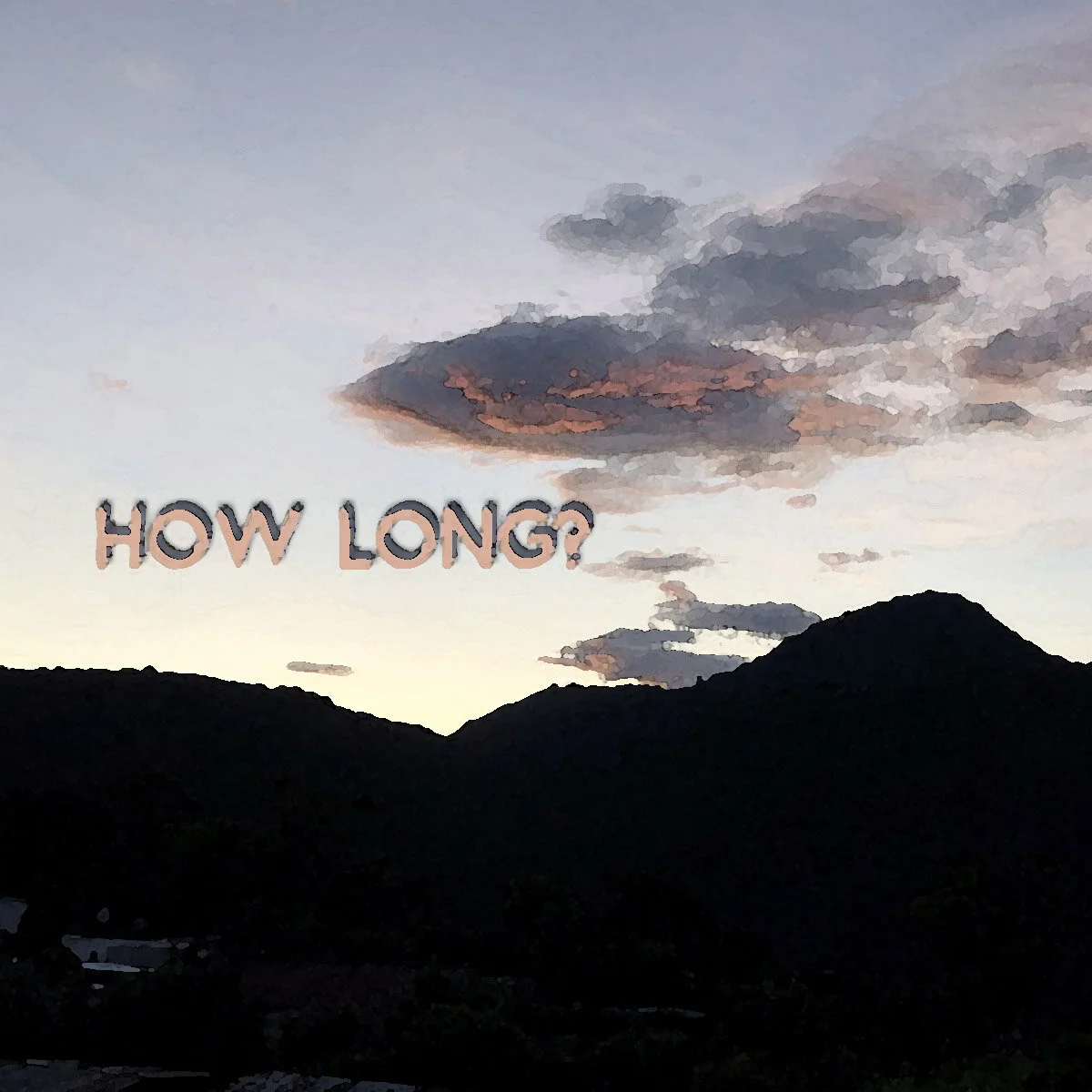
How Long?
Psalm 40:1-11
Psalm for the Second Sunday after Epiphany (Year A)
Psalm 40 is a passage of the Bible that I and many others cannot read without hearing Bono singing in our head. In a way, we probably should hear more psalms in our head like that. Not necessarily with U2’s frontman belting it out, but with music that amplifies the anguish and joy that make up this brutally honest book of common prayers. Yet—because of U2—the words that I most commonly associate with the 40th Psalm do not appear in the passage at all:
How long to sing this song?
And it creates a tension within the psalm itself. “I waited patiently for the Lord” and yet how long to sing that song. Patience is not wearing thin, but it feels like there are centuries, even millennia worth of waiting building up behind it. God pulls us out of the pit, yet “How long?” has this element of wondering how many times we are going to fall down into that pit. A new song will be sung, but how long will we sing it?
Psalm 40 is a song of trust and gratitude. It is a poem in which the psalmist begs for God’s help.
Happy are those who make
the Lord their trust,
who do not turn to the proud,
to those who go astray after false gods.
You have multiplied, O Lord my God,
your wondrous deeds and your thoughts toward us;
none can compare with you.
Were I to proclaim and tell of them,
they would be more than can be counted.
Yet…how long?
It is the the push and pull of the already and the not yet. It is “I believe. Help my unbelief.” God, I trust You. You have been my help and refuge. You have lifted me up. And yet singing this song of praise sometimes can be difficult. Sometimes I let my selfishness trip me up and the words get caught in my throat. Sometimes I wrestle with the church resembling the proud chasers of false gods and I cannot bear the melody.
The question of “How long?” canvasses the psalms. How long will evil men triumph? How long will Your people suffer? How long until God rescues us? How long will the oppressed be trampled under foot? The Book of Psalms is full of praise and provocation, devotion and doubt. There are days in which I feel Psalm 8’s “O Lord our Lord, how majestic is your name in all the earth.” And there are those times in which psalmist of 44 begging God to wake up seems more appropriate.
It seems contradictory. But I think that both can sit comfortably side by side. One trusts but wonders. One hope yet has doubts. One loves but also struggles with the parts that make that love difficult. One can only move forward acknowledging and owning all those seemingly incongruous aspects of their faith.
God, You have put a new song in my mouth. I will sing a new song. But how long to sing this song?

I believe that most of us experience an internal tug-of-war between the past and the future. In The Screwtape Letters, C.S. Lewis’ titular demon supervisor advises his underling Wormwood that one of best ways to keep a human from doing good is to keep them ping-ponging between those two times that are not the present. One keeps trying to recapture or reach towards moments that are mist. It can keep a person from doing something.
The quote above resonates with me because it harnesses the past and unfinished future into a catalyst that animates our present. We remember the life, death, and resurrection of Jesus because it means something today and compels us to presently work for the Good that is already here, but also not yet. We remember the hope and pain of the past to do something that help us take some sort of step each and every day. We realize that the hope which exists within the gospel story is not yet fully realized. Many people are still being left behind and forgotten. The realization, as the theologian Metz states, puts pressure and questions on the present.