

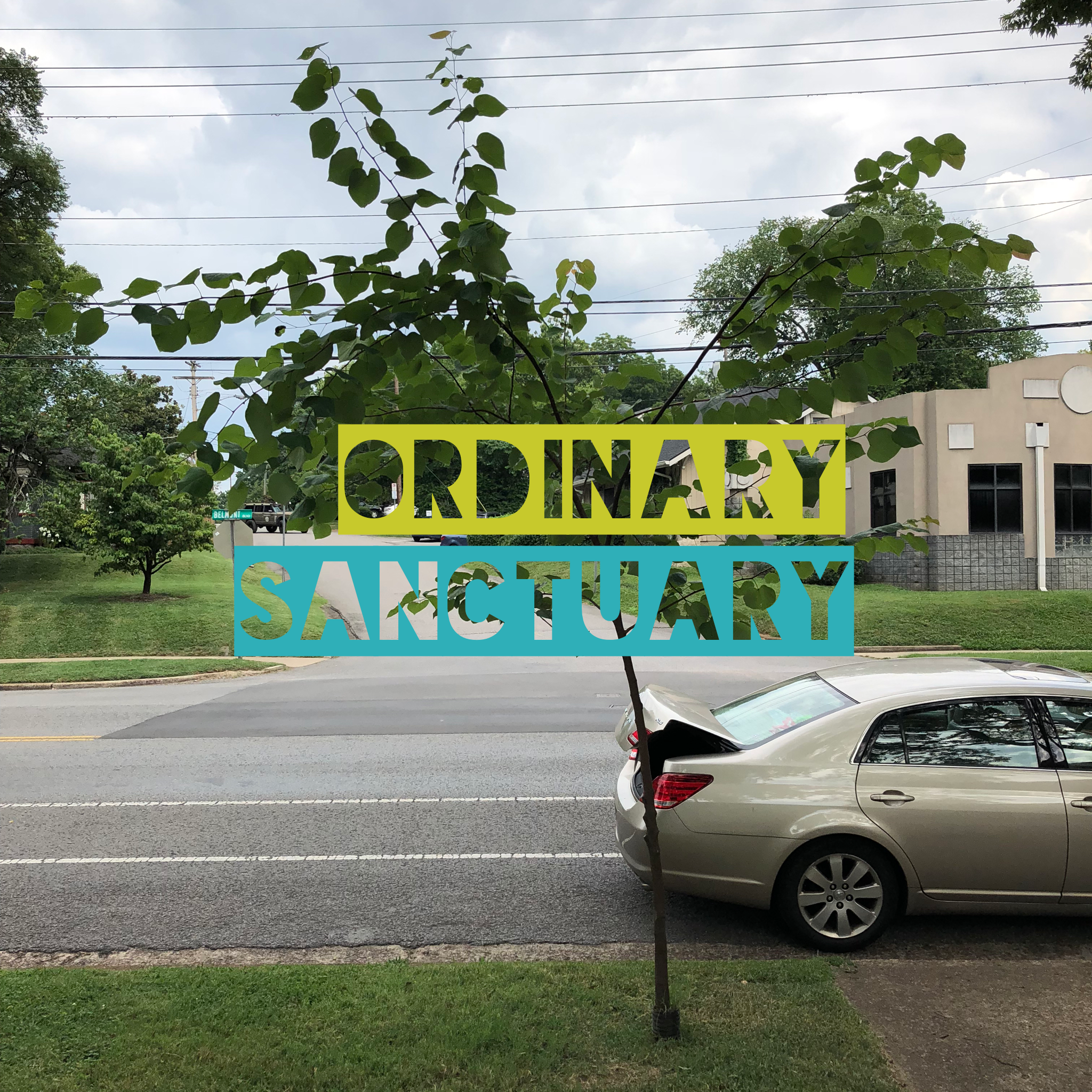
Ordinary Sanctuary
A couple of days ago, I started to write a post entitled "No Sanctuary." It was about how this has been a long summer and how I am just completely fried physically, mentally, emotionally, and spiritually. And I would have written about how there does not seem to be any place that I can recharge because I work at a church, have children who need attention, yada yada yada.
I realized fairly quickly that it would have been really whiny. So I stopped. All of what I felt was real, but my heart wasn't in the right place. I was complaining.
Yesterday I went for a run. It was a bit of a slog despite the fact that it was a rare afternoon when the temperature wasn't oppressively hot. When I got done, I pulled a towel and a Gatorade out of my car and sat down on a slope of grass. Nothing special. It's what I usually do when I run that particular route.
And I felt peace. Peace that I had not felt in maybe two months. Just as I sat there trying to cool off and watching cars whizz by. I did not feel alone or hurried or concerned. And I can't adequately describe what it's like when your soul seems like a roiling sea and it is suddenly as still as glass. But that's what happened.
I talked with God about how I was tired, but I was thankful for the things that made me tired. I talked about how I wanted to be a better husband, father, minister, etc. But mainly I was just grateful for the peace because it was a gift that unexpectedly showed up on my doorstep in the most ordinary way.
I'm still tired and am learning some valuable lessons about self care. And I'm being reminded that the light gets through when you don't think it will. I hope that is an encouragement to you if you're in a place where you're tired or God seems quiet. I was ready to declare that there was no sanctuary for me and then I found one sitting in the grass as I watched cars roll by.

I believe that most of us experience an internal tug-of-war between the past and the future. In The Screwtape Letters, C.S. Lewis’ titular demon supervisor advises his underling Wormwood that one of best ways to keep a human from doing good is to keep them ping-ponging between those two times that are not the present. One keeps trying to recapture or reach towards moments that are mist. It can keep a person from doing something.
The quote above resonates with me because it harnesses the past and unfinished future into a catalyst that animates our present. We remember the life, death, and resurrection of Jesus because it means something today and compels us to presently work for the Good that is already here, but also not yet. We remember the hope and pain of the past to do something that help us take some sort of step each and every day. We realize that the hope which exists within the gospel story is not yet fully realized. Many people are still being left behind and forgotten. The realization, as the theologian Metz states, puts pressure and questions on the present.