

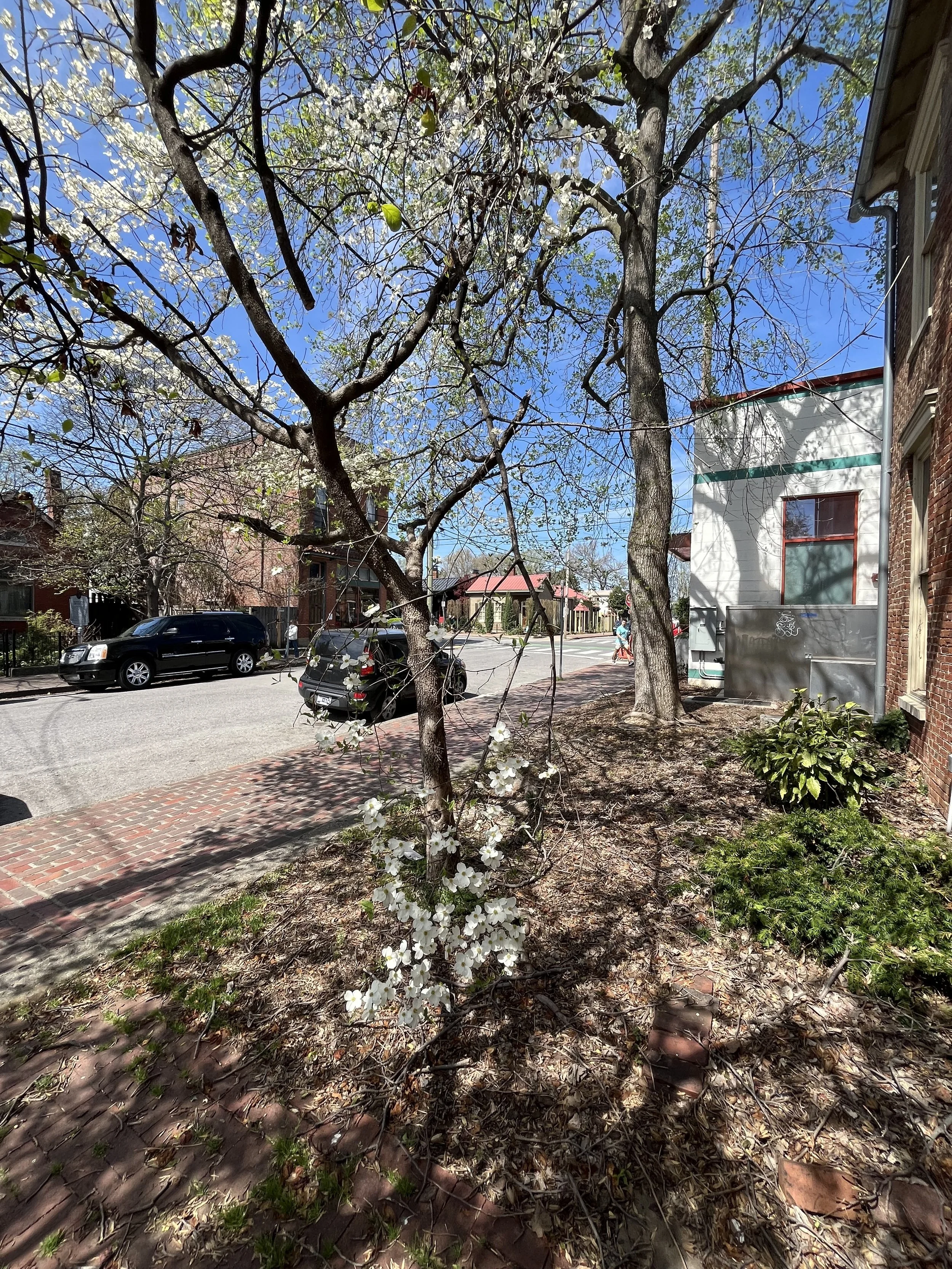

Morning
Lamentations 3:19-26
Psalm (you read that correctly) for the Twentieth Sunday after Pentecost (Year C)
The thought of my affliction and my homelessness
is wormwood and gall!
My soul continually thinks of it
and is bowed down within me.
But this I call to mind,
and therefore I have hope:
The steadfast love of the Lord never ceases,
His mercies never come to an end;
they are new every morning;
great is Your faithfulness.
"The Lord is my portion," says my soul,
"therefore I will hope in Him."
The Lord is good to those who wait for Him,
o the soul that seeks Him.
It is good that one should with quietly
for the salvation of the Lord.
I will not pretend that I have been in the same boat as the writer of Lamentations. I don't know what it is like to see my entire world fall apart. But I have felt that sense of spiritual homelessness. That wandering is difficult to say the least. So I tried my best to hang on and put one foot in front of the other even as I was uncertain of where I was going. I don't say that to brag. It was honestly out of stubbornness and desperation than anything else. Where else was I going to go?
Five years ago, I preached for the first time as an adult in a seminary class. That sermon began with a story set in Nashville. Tomorrow morning I'll preach a sermon at our new church just a few miles away from where that story took place. The symmetry is kind of beautiful even as I worry about what I will say tomorrow (which is ironic because the sermon is on not worrying).
My story isn't over and I don't know what twists and turns it may yet take. But tomorrow morning is a reminder that God's mercies and faithfulness are new each day. Sometimes the wait is long. Sometimes the journey can seem treacherous. Sometimes the night seems like forever. Yet morning does eventually come.


I believe that most of us experience an internal tug-of-war between the past and the future. In The Screwtape Letters, C.S. Lewis’ titular demon supervisor advises his underling Wormwood that one of best ways to keep a human from doing good is to keep them ping-ponging between those two times that are not the present. One keeps trying to recapture or reach towards moments that are mist. It can keep a person from doing something.
The quote above resonates with me because it harnesses the past and unfinished future into a catalyst that animates our present. We remember the life, death, and resurrection of Jesus because it means something today and compels us to presently work for the Good that is already here, but also not yet. We remember the hope and pain of the past to do something that help us take some sort of step each and every day. We realize that the hope which exists within the gospel story is not yet fully realized. Many people are still being left behind and forgotten. The realization, as the theologian Metz states, puts pressure and questions on the present.