
Being Pope seems like a wide-ranging job. Just recently, Pope Francis was in South America and spoke of inequality and corruption while also meeting with some of the poorest people on that continent. Pope Urban VIII looked at a fountain in Rome and said, “Eh…it could use more flair.” And that’s kind of how we got the Trevi Fountain (though it took nearly a century and a half for that flair to unfurl).
Legend eventually sprung up that Trevi had some wish fulfillment mojo going. You are supposed to stand with your back to the fountain and toss a coin in with your right hand over your left shoulder. There are variations concerning how many coins need to be thrown in for what kind of wishes. Regardless, tourists toss in about €3,000 worth of coins a day.
As such, the Trevi Fountain is kind of why EA and I are here. Not in reality, but this does make for a nice origin story. When I was here eleven years ago, our tour guide explained the legend of the fountain to us and then many of us made sure to toss our coins with the proper technique. Deep into foreign study and sometime around Valentine’s Day, I wished that I would spend my life with EA.
Now I’m obviously not saying that we are together because of that wish or that the fountain has some sort of magical powers. Yet that wish did come true and on the mantle of our living room sits a framed picture of Trevi that I took that day. The fountain is a sweet and whimsical part of our story.
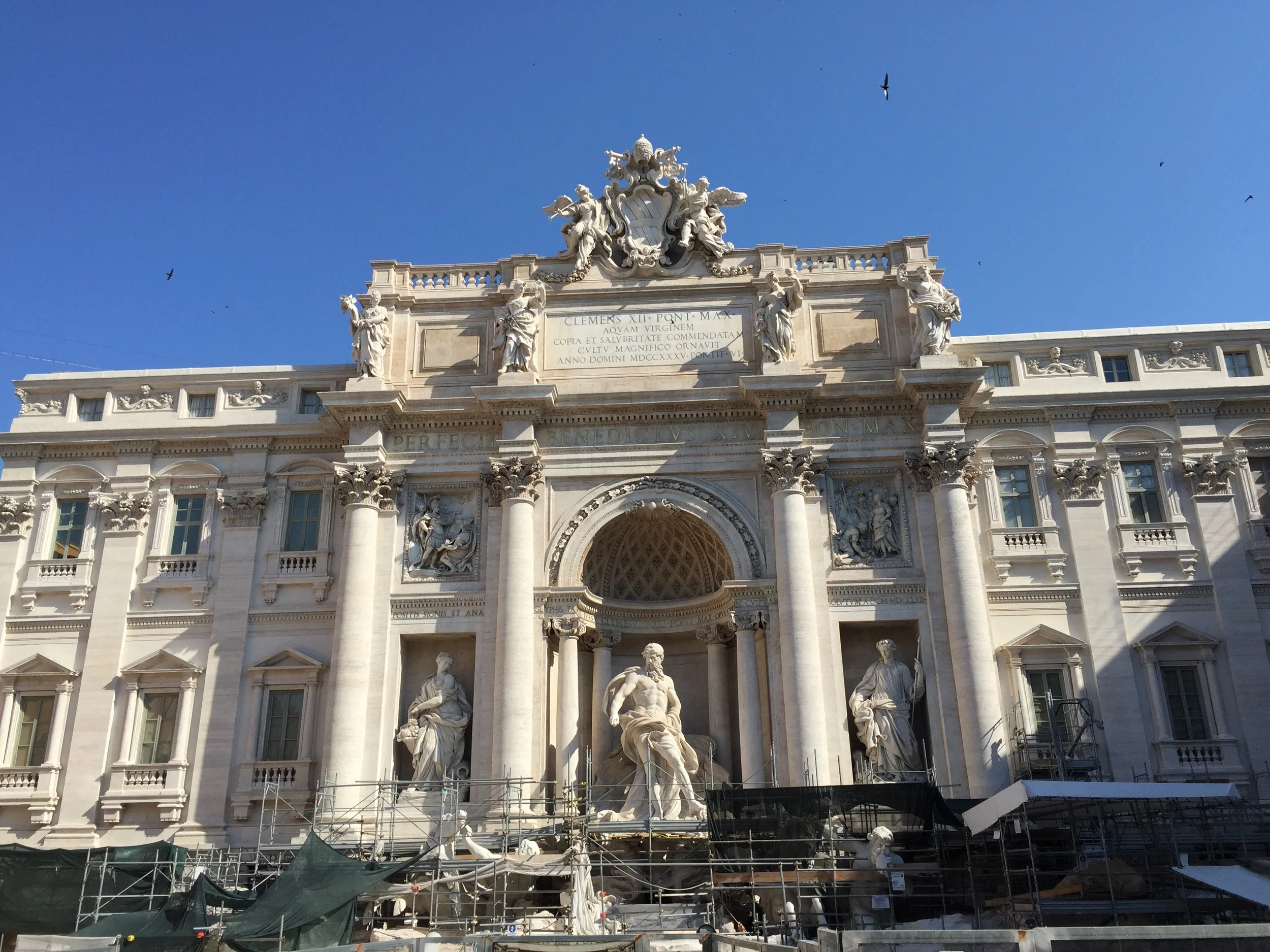
So the two of us come back to Rome together and, of course, the Trevi Fountain is under massive renovation. The fountain is drained. There is scaffolding around the sculptures. There is even plexiglass around the entire structure. They did put a makeshift bathtub-sized fountain in front of the construction area so that wishers could still toss coins. But, come on, that’s like going to the Magic Kingdom and the only thing open is the Swiss Family Robinson Treehouse.
Yet I can’t begrudge them (whoever they are; the Italians I assume) for wanting to renovate the fountain. It has been around for nearly 250 years and you want it to continue to stand the test of time. Thus there have to be times for repair and renovation. If you just wait until the whole thing starts crumbling then it might be too late.
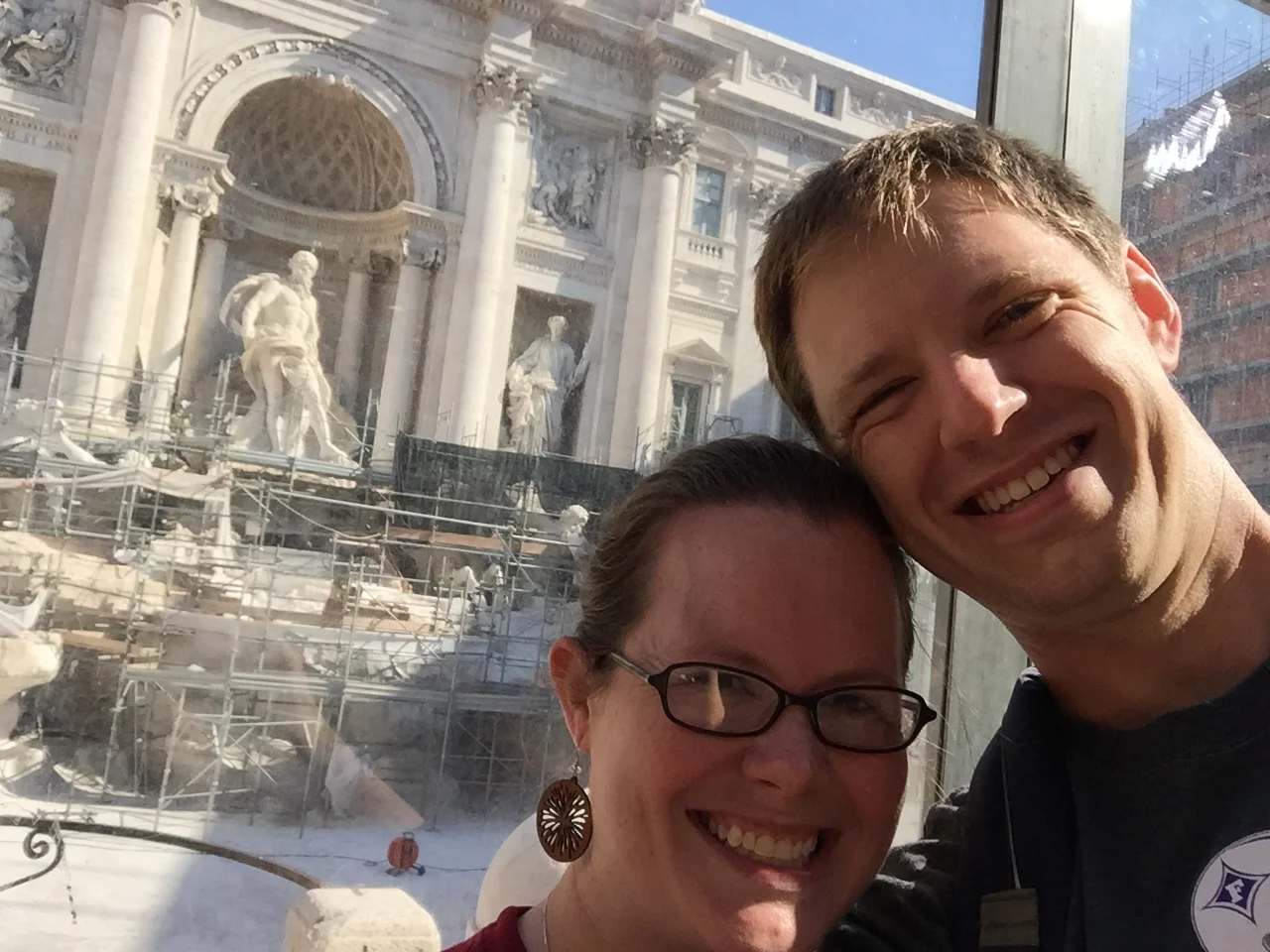
Renovation is its own kind of magic. It is not glamorous. It is often slow, day-to-day work, but it can do wonders. This trip is kind of a renovation for me and EA (which, because we are vacationing in Italy, I realize runs contrary to my last point). We’re not broken. Not by a longshot. But these times of rest—where just the two of us have adventures without our boys—are going to help us in the long haul. A marriage needs that kind of care and attention. If we just let things run their course then entropy would eventually take over. I don’t want that. I want our love to grow over our lifetimes. So we go on adventures and throw up the scaffolding to renovate.
Despite the initial disappointment, the being renovated Trevi Fountain was still special. It is a special place to our relationship. And even though it did not have the cinematic magic of people tossing coins into a sparkling fountain, it reminded me of the practical magic that is our journey together. I love that this place is part of our origin story and that it can symbolize our ongoing story as well.
I believe that most of us experience an internal tug-of-war between the past and the future. In The Screwtape Letters, C.S. Lewis’ titular demon supervisor advises his underling Wormwood that one of best ways to keep a human from doing good is to keep them ping-ponging between those two times that are not the present. One keeps trying to recapture or reach towards moments that are mist. It can keep a person from doing something.
The quote above resonates with me because it harnesses the past and unfinished future into a catalyst that animates our present. We remember the life, death, and resurrection of Jesus because it means something today and compels us to presently work for the Good that is already here, but also not yet. We remember the hope and pain of the past to do something that help us take some sort of step each and every day. We realize that the hope which exists within the gospel story is not yet fully realized. Many people are still being left behind and forgotten. The realization, as the theologian Metz states, puts pressure and questions on the present.