
Matthew 4:17
"The White Witch? Who is she?"
"Why, it is she that has got all Narnia under her thumb. It's she that makes it always winter. Always winter and never Christmas; think of that!"
"How awful!" said Lucy.
Always winter and never Christmas. It would be awful. Winter has its benefits. But always cold. Nature always in a slumber. The days always short. The night always frozen. But the "never Christmas" aspect was one of C.S. Lewis' masterstrokes in constructing Narnia under the evil reign of the White Witch.
As a 6th grader, I immediately understood the absence of Christmas was shorthand for the fact that this world had no joy. There was nothing to celebrate. There was nothing to warm hearts in the frigid cold. "Never Christmas" turned Narnia from an icy purgatory to a hell that was frozen over. It would be awful indeed.
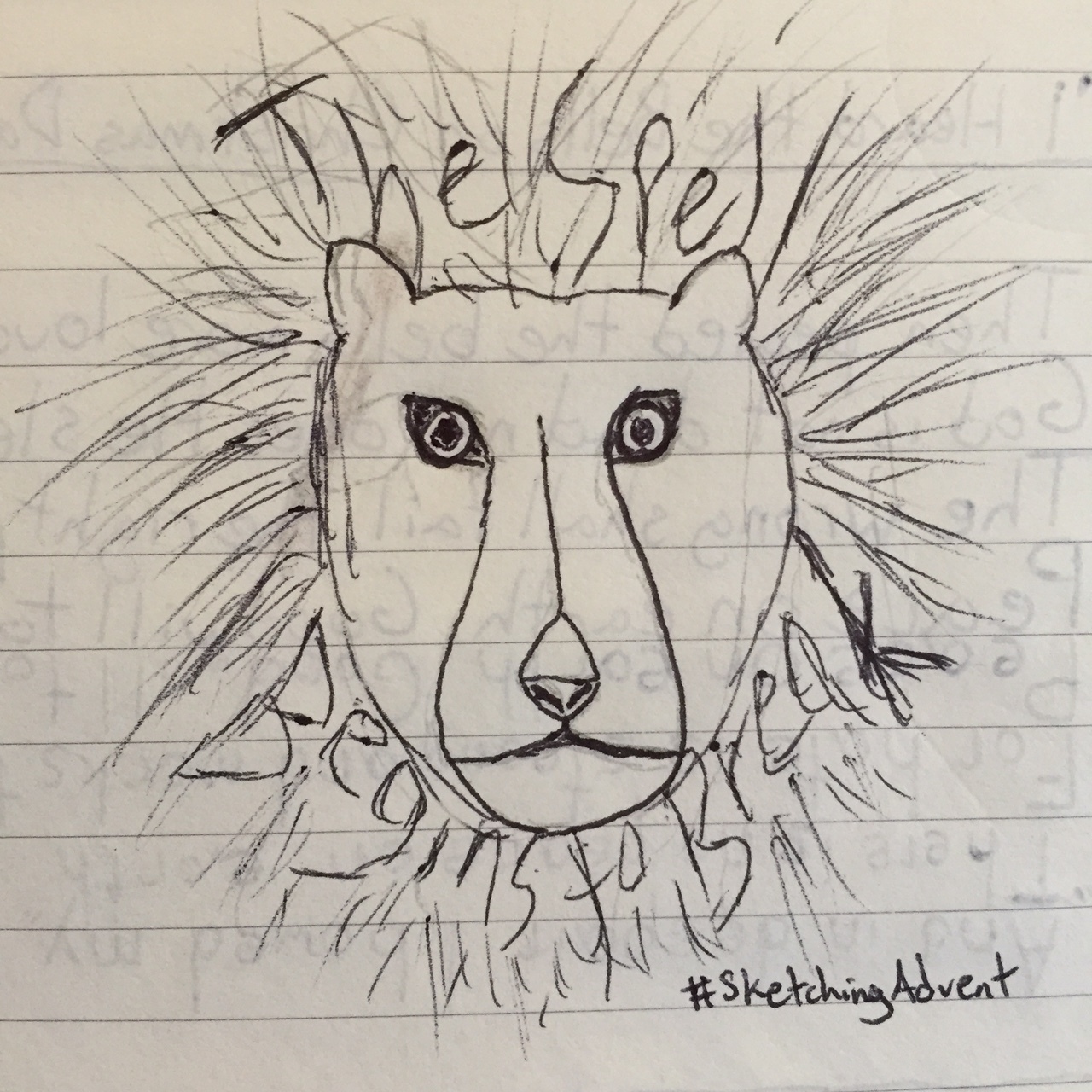
All of which makes the appearance of Father Christmas midway through the book a big deal. His arrival indicates a subtle shift. Narnia was still covered with ice and snow. But Christmas meant that the tide was turning. There was a burning ember of hope in a hopeless place. The Lion, the Witch, and the Wardrobe was my favorite book growing up and the name of the chapter in which Christmas finally arrives has become almost sacred to me: The Spell Begins to Break.
For that is what Christmas represents isn't it? The Incarnation, God's love coming down to us begins to break the spell of evil that was upon this world. "To save us all from Satan's power when we had gone astray." Christmas tells us that the awfulness of this world will not forever stay awful. It tells us that the ice cold state of this world and the frozen nature of our hearts will thaw. Light and warmth are coming. The tide is turning. There is a burning ember of hope. The spell begins to break.
Yet "begins to break" indicates correctly that everything is not yet right. We are only at the start. Peter, Susan, Edmund, and Lucy had a long way to go before they saw spring blossom in Narnia. The White Witch was still at large. Christmas indicated that she was weakening but the Witch would still break many hearts before she was through.
The Kingdom of God, Jesus preached, had come near. The gospels is fraught with the tension of that phrase. The Kingdom is here, but it is still coming. It puts the earth in this weird limbo. Christmas has arrived. The spell began to break. But it's still winter. We are in this post-Christmas and even post-Easter world, but it is still always Advent. We're still waiting.
Some of our winter days feel like spring. We see the Kingdom springing to life all around us. And some of our winter days are buried under mounds of snow while an icy wind slices us in two. It is a weird state in which to live, waiting for the spell to be completely broken.
Yet it is not the icy hell that is always winter and never Christmas. I still remember how momentous that moment was when I read The Lion, the Witch, and the Wardrobe. I still remember how it felt to realize that help was on its way and evil was beginning to weaken. I still remember how that filled me with hope as a child. That subtle shift may seem like nothing, but it meant the everything was going to change.
Christmas is almost here. No matter how frigid the winter may get, never forget that the spell has already begun to break.
I believe that most of us experience an internal tug-of-war between the past and the future. In The Screwtape Letters, C.S. Lewis’ titular demon supervisor advises his underling Wormwood that one of best ways to keep a human from doing good is to keep them ping-ponging between those two times that are not the present. One keeps trying to recapture or reach towards moments that are mist. It can keep a person from doing something.
The quote above resonates with me because it harnesses the past and unfinished future into a catalyst that animates our present. We remember the life, death, and resurrection of Jesus because it means something today and compels us to presently work for the Good that is already here, but also not yet. We remember the hope and pain of the past to do something that help us take some sort of step each and every day. We realize that the hope which exists within the gospel story is not yet fully realized. Many people are still being left behind and forgotten. The realization, as the theologian Metz states, puts pressure and questions on the present.