


There is this quiet moment in the Gospel According to Luke. It’s one that I don’t think about that often and I would not be thinking about it now if one of our pastors had not mentioned that yesterday was the celebration of this story. Forty days after their firstborn comes into the world, Mary and Joseph present Jesus at the temple.
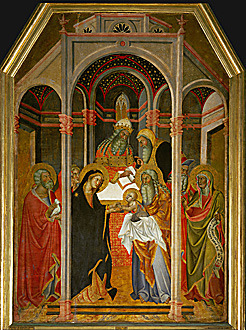 This important moment starts out quite ordinarily. Perhaps too ordinarily. We are told that the couple opts to sacrifice a pair of birds, the option in the Law given to those too poor to present a lamb. The newborn king is growing up in less-than-kingly circumstances.
I can’t imagine the headspace that those two occupied. Imagine the stress and awe of having a newborn child compounded by the weight and questions of it being the Son of God, the whispers surrounding Mary’s pregnancy, and living in poverty. You wouldn’t have totally blamed Mary and Joseph if they left him in a basket at the temple doorstep.
We then meet a man and a woman that we will never see again, but they play a role in this incredibly important moment. Simeon was a righteous man. God promised him that he would not die before he saw the Messiah. He took the infant in his arms and praised God. In Luke, his song joins those of Mary, Zechariah, and the angelic chorus.
Anna was a prophet. She had not left the temple for decades. She worshipped, prayed, and fasted day and night. This eighty-four year old woman came up to this young mother and her husband. She thanked God for their child and spoke about how he was the one to which so many had looked forward. He would bring about the redemption of Jerusalem.
After they do all that the Law requires, Mary, Joseph, and Jesus leave the temple to return to Nazareth. We are told the child grows in strength, wisdom, stature, and that God’s grace was on him. It’s a short story; only eighteen verses.
I don’t have any great insight, but I think that this is just a perfect little scene. And I think that part of it is that—even though it is an intimate moment—everyone is there.: women and men, young and old, single and married, the poor. All are part of this moment with God incarnate. All are important.
For some reason that stuck out to me. Things have seemed kind of contentious in the church of late and that’s not going to change for awhile I fear. But this small story gives me some comfort. I get to look around and see that everyone is here. I do not know if that makes sense, but my heart needed that. It’s going to keep needing that.
I believe that most of us experience an internal tug-of-war between the past and the future. In The Screwtape Letters, C.S. Lewis’ titular demon supervisor advises his underling Wormwood that one of best ways to keep a human from doing good is to keep them ping-ponging between those two times that are not the present. One keeps trying to recapture or reach towards moments that are mist. It can keep a person from doing something.
The quote above resonates with me because it harnesses the past and unfinished future into a catalyst that animates our present. We remember the life, death, and resurrection of Jesus because it means something today and compels us to presently work for the Good that is already here, but also not yet. We remember the hope and pain of the past to do something that help us take some sort of step each and every day. We realize that the hope which exists within the gospel story is not yet fully realized. Many people are still being left behind and forgotten. The realization, as the theologian Metz states, puts pressure and questions on the present.