

The Old Testament passage in church this past Sunday was Isaiah 55. This chapter is home to one of the more oft-used maxims in the Christian faith: “God’s ways are higher than our ways.”
Usually, I hear that phrase used when things we don’t like happens. Either it is when we or someone close to us is suffering. Or it’s when there is an aspect of theology—sometimes of God, sometimes maybe not—that we don’t like. This is not to say that those contexts are inappropriate (though, honestly, I don’t think you should ever use pithy phrases anytime a friend is suffering), but I was reminded of the original context of that passage on Sunday.
It’s an invitation to abundant life. It is about a day when God throws the doors open for people outside of Israel. It would seem that one of God’s ways that are higher than our own is mercy.
Seek the Lord while He may be found, call upon Him while He is near; let the wicked forsake their way, and the unrighteous their thoughts; let them return to the Lord, that He may have mercy on them, and to our God, for He will abundantly pardon. For My thoughts are not your thoughts, nor are your ways My ways, says the Lord. For as the heavens are higher than the earth, so are My ways higher than your ways and My thoughts than your thoughts.
-Isaiah 55:6-9 NRSV
That was a good to hear on Sunday morning. God is mystery and there are things that we are never going to understand about God. Yet when scripture pulls out the “God’s ways are higher than your ways” card, it is saying that God’s mercy, redemption, and grace are so beyond that of humans.
God welcomes those that we would not necessarily welcome. In fact, Christians may be surprised by who feels the warmth of God’s embrace. Jesus attested to that and demonstrated that. As one who by all accounts should not be welcome, I am thankful that God’s ways are higher.
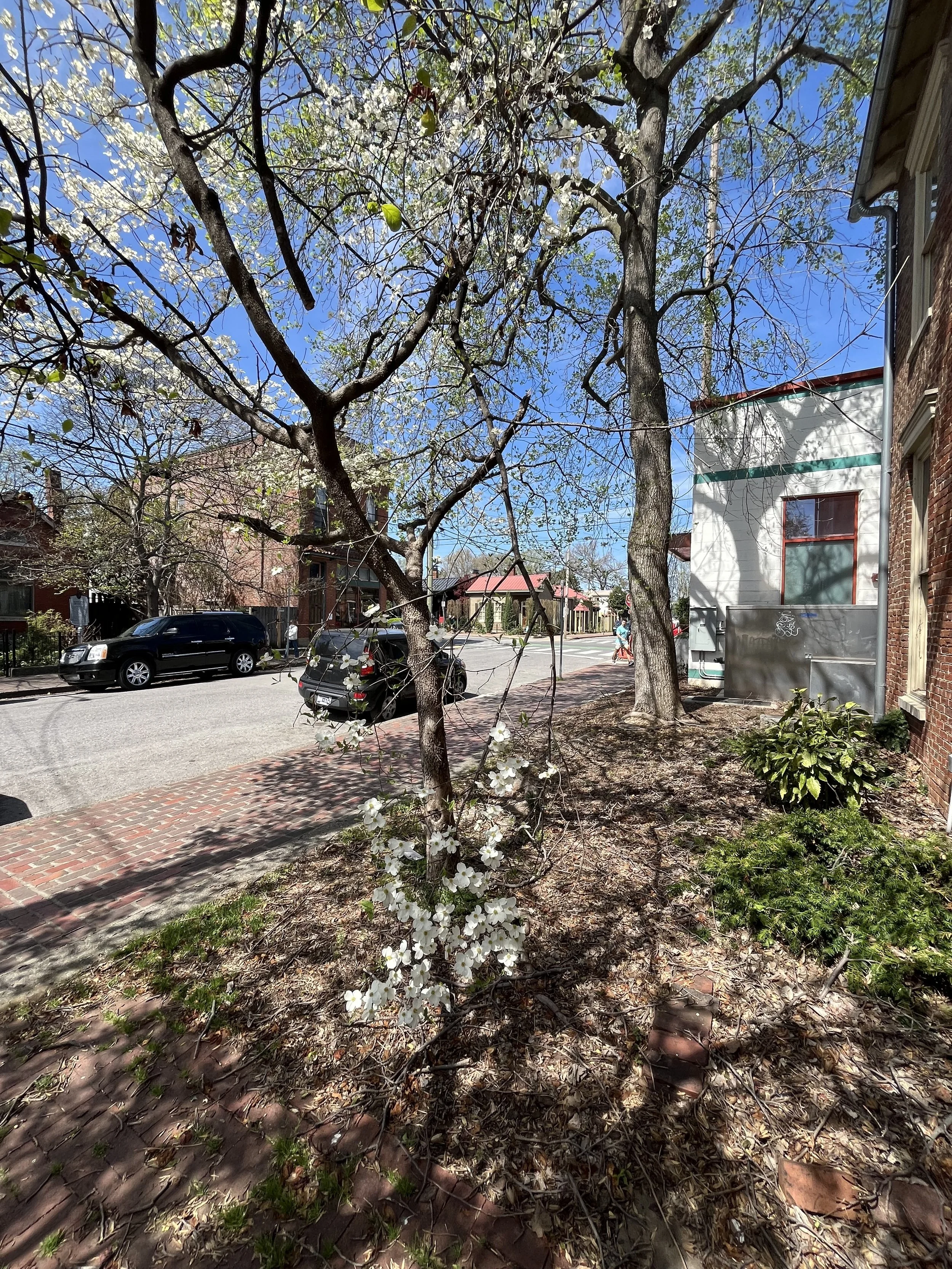
We didn’t read the end of the chapter in church, but I love the picture it paints of nature celebrating the redemption God has brought. The Old Testament passage this week was read in conjunction with the Parable of the Prodigal Son and His Brother. I see echoes of these mountains, hills, and trees rejoicing in the smaller scale scene of a man’s household celebrating the return of a lost son. I am grateful that God’s mercy is greater and higher than my own.
For you shall go out in joy, and be led back in peace; the mountains and hills before you shall burst into song, and all the trees of the field shall clap their hands. Instead of a thorn shall come up the cypress; instead of the brier shall come up the myrtle; and it shall be to the Lord for a memorial, for an everlasting sign that shall not be cut off.
-Isaiah 55:12-13 NRSV
I believe that most of us experience an internal tug-of-war between the past and the future. In The Screwtape Letters, C.S. Lewis’ titular demon supervisor advises his underling Wormwood that one of best ways to keep a human from doing good is to keep them ping-ponging between those two times that are not the present. One keeps trying to recapture or reach towards moments that are mist. It can keep a person from doing something.
The quote above resonates with me because it harnesses the past and unfinished future into a catalyst that animates our present. We remember the life, death, and resurrection of Jesus because it means something today and compels us to presently work for the Good that is already here, but also not yet. We remember the hope and pain of the past to do something that help us take some sort of step each and every day. We realize that the hope which exists within the gospel story is not yet fully realized. Many people are still being left behind and forgotten. The realization, as the theologian Metz states, puts pressure and questions on the present.