

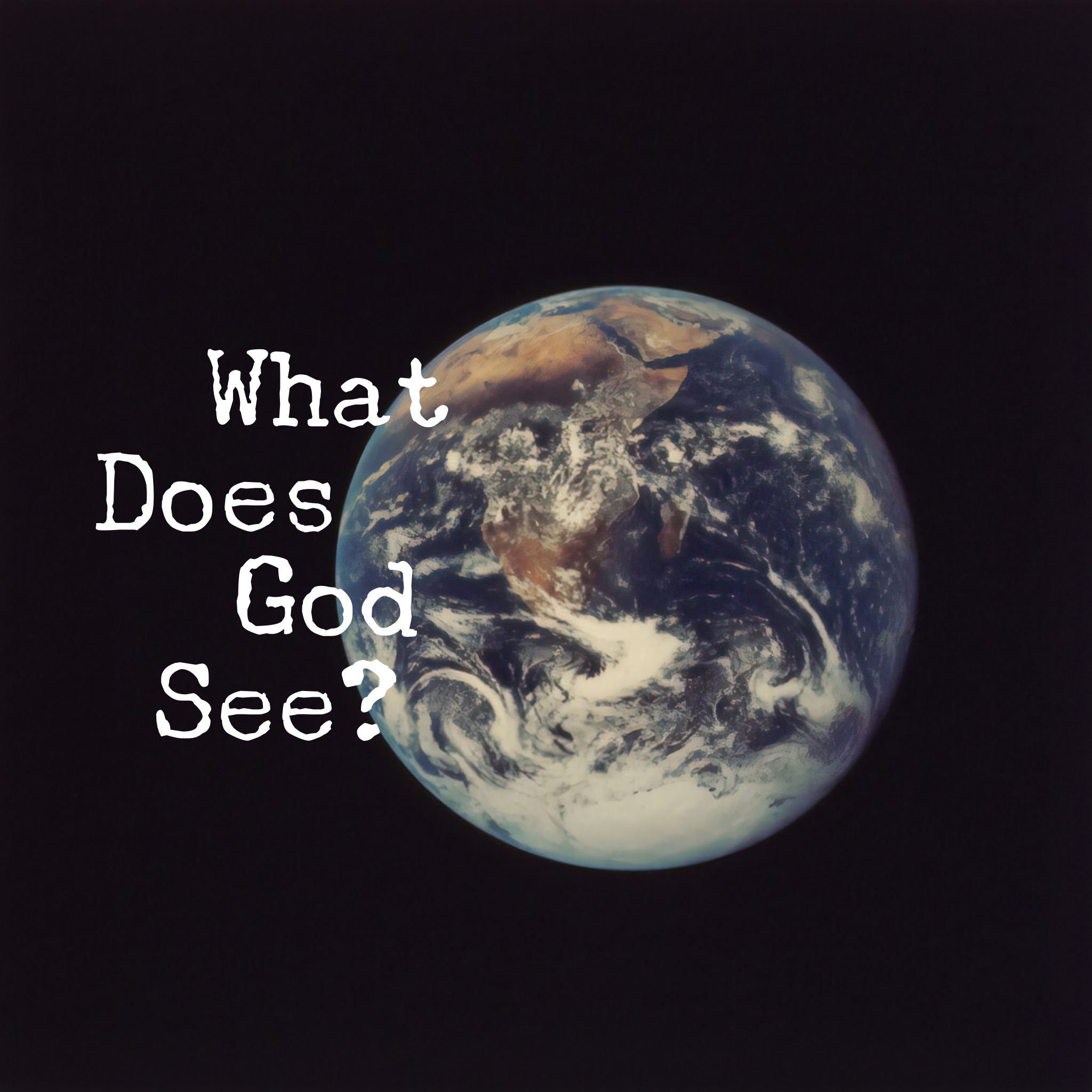
What Does God See?
What does a day look like to God? Is it something the Divine ducks in and out of? Does God experience this all with us? Is the commitment to being Immanuel so strong that God sits with us day in and day out?
What does One do with 7 billion breathing, broken, and beautiful humans? I have no idea where the Infinite would even begin. I’m finite so I can’t imagine. But I wonder if God is horrified and heartbroken by us. When a school shooting happens or war breaks out or someone chooses the easy lie over the hard truth, does it frustrate God? Does it seem like some sort of cruel Groundhog Day where a hideous history repeats itself in a myriad of ways? Does God hope that this time someone will do something? Maybe today is the day that the scales tip and enough people will be brave enough to do the right thing. Maybe God knows the day. Maybe God knows it’s not today but still hopes like when you watch an old movie, but hope that maybe, somehow the beloved character escapes a cruel fate.
And I wonder how God holds back. There is a song that I love dearly. It wasn’t written about God, but it’s about God. A line that I’ve always clung to mused “I heard you laugh / I heard you sing, ‘I wouldn’t change a single thing.’” I have hoped against hope that is how God feels. That God, seeing the outcomes of an infinite number of ways this creation was going to shake out, has stayed the course on this way. But there are some days where I do not know how God could laugh or sing. How could God now want to change a day where even one child starves? I cling to that idea, but I also hold it at arms length. The tidal wave of hurt that crashes into each day seems like a bug in the system; like something that could and should be changed. How could God not be heartbroken by us? And if God could intervene and doesn’t, should we not be a bit heartbroken too? I trust God and yet I struggle with that trust sometimes.
But I also wonder if God is awed by us. And perhaps it is foolish to think that anything can awe the awesome. Yet, scripturally at least, God has this strange affinity toward us. Maybe the good rises above the brokenness. Perhaps the person truly trying to make an honest living, the individual who loves selflessly, anyone looking out for the orphan and widow counteracts the greed and hatred and lying. Maybe the helpers in the midst of tragedy sing louder than the tragedy itself. There are days when that seems hard to believe. This is one of those days. But maybe there is more here than I know. Maybe the echoes of Christ reverberate in such a way that it causes God to laugh and sing.
I wonder. My finite, context-bound mind could never begin to grasp it. But I do wonder. I have questions. I have concerns. I have hopes. And one of those hopes is that those questions and wonderings and seekings maybe, hopefully, might cause God to laugh and sing too.


I believe that most of us experience an internal tug-of-war between the past and the future. In The Screwtape Letters, C.S. Lewis’ titular demon supervisor advises his underling Wormwood that one of best ways to keep a human from doing good is to keep them ping-ponging between those two times that are not the present. One keeps trying to recapture or reach towards moments that are mist. It can keep a person from doing something.
The quote above resonates with me because it harnesses the past and unfinished future into a catalyst that animates our present. We remember the life, death, and resurrection of Jesus because it means something today and compels us to presently work for the Good that is already here, but also not yet. We remember the hope and pain of the past to do something that help us take some sort of step each and every day. We realize that the hope which exists within the gospel story is not yet fully realized. Many people are still being left behind and forgotten. The realization, as the theologian Metz states, puts pressure and questions on the present.