


Zephaniah 3:17-20
"Rudolph the Red-Nosed Reindeer" is better than it has any right to be. The longest-running Christmas special in TV history is built off the barest of premises: Reindeer with red nose gets mocked by fellow reindeer, but is called upon to guide Santa's sleigh one particularly foggy Christmas Eve. That's it and they stretched that into nearly an hour.
To pad the running time, the folks at Rankin-Bass had to add some story elements not found in the Johnny Marks song. Some additions were obvious choices (love interest Clarice), some less so (wannabe dentist elf Hermey), and some were downright awesome (Yukon Freakin' Cornelius).
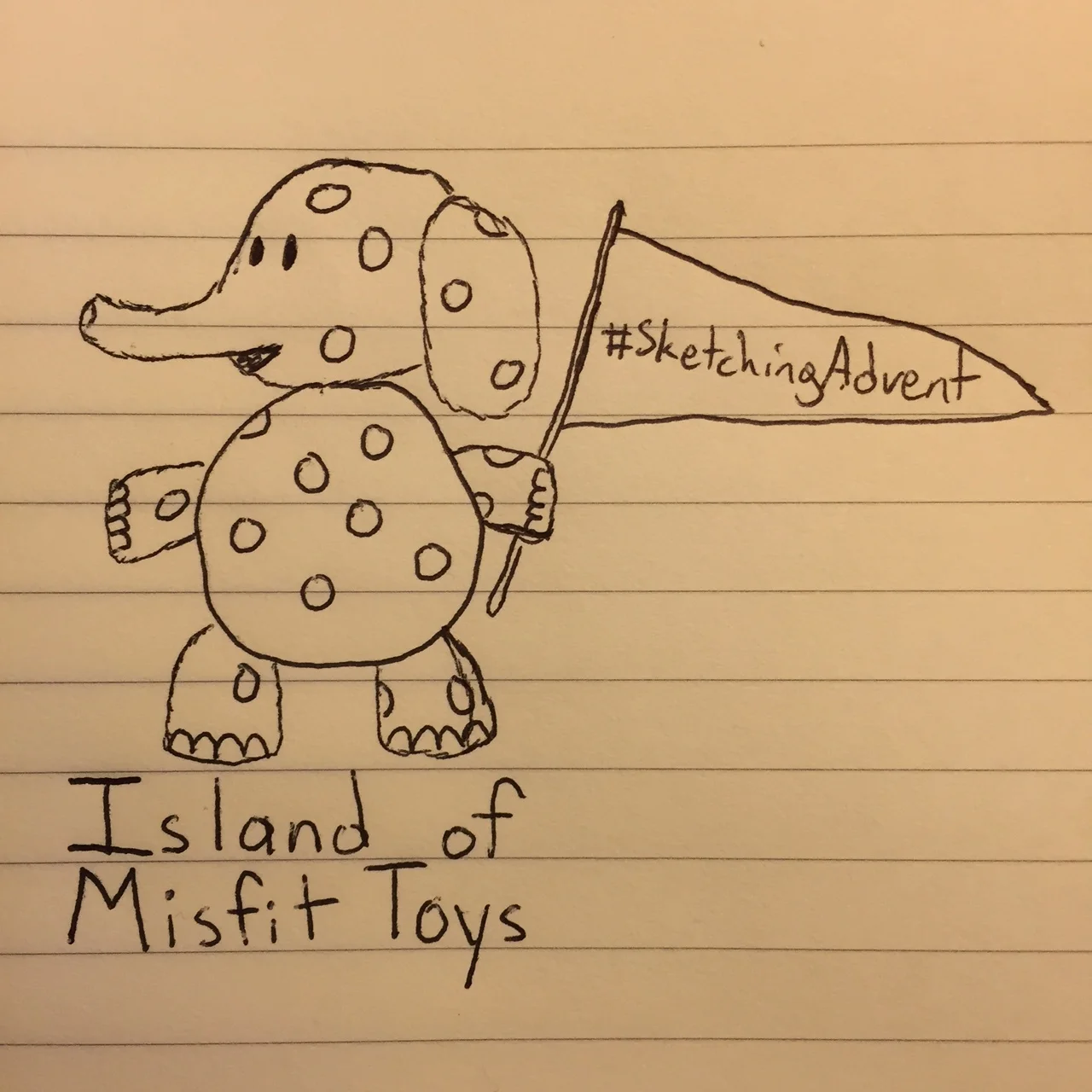
Yet the most brilliant move on behalf of the special's creators was to build upon the idea of Rudolph being an outcast. The story is ultimately a tale about the value found in those believed to have none. That theme is demonstrated in both Rudolph's and Hermey's journey and is especially pronounced when they visit the Island of Misfit Toys.
The Island of Misfit Toys was just that: an island where unwanted toys lived out their days. All any of the toys wanted was to be loved by a child, but they were defective in one way or another. Yet in the end (spoiler alert for a 51 year old TV special), Santa and Rudolph return to the island and find the toys homes where they are loved. It turned out that the Misfit Toys were not as unwanted or defective as everyone had thought.
In Advent, we talk a good deal about what is wrong with this world as we look forward to God making things right. In a way, we see this planet as a humongous Island of Misfit Toys. All of us are broken or messed up in some way. We devalue others. We devalue ourselves.
Yet God sees enormous worth in each of us. We see this throughout scripture. Israel was a misfit nation. Countless heroes of the Hebrew Bible—Abraham, Jacob, Moses, David, and more—were misfits. The disciples were misfits. Paul was a misfit. Yet God loved them and did incredible things through them all. In the story of Jesus, we celebrate that God came down among us misfits in all of our brokenness and yet loved us fully.
Once when I was feeling particularly like a misfit as a teenager, someone shared Zephaniah 3:17-20 with me which includes the passage "[God] will rejoice over you with gladness, He will renew you in His love." Later Zephaniah speaks of the people being brought home. This word from the prophet was for his exiled misfit people rather than to boost the self-esteem of a Christian teenager in the 1990s. Yet I think we can still claim it.
Jesus demonstrates that God rejoices over us misfits. God will renew us with love. And in God we find our home.
I believe that most of us experience an internal tug-of-war between the past and the future. In The Screwtape Letters, C.S. Lewis’ titular demon supervisor advises his underling Wormwood that one of best ways to keep a human from doing good is to keep them ping-ponging between those two times that are not the present. One keeps trying to recapture or reach towards moments that are mist. It can keep a person from doing something.
The quote above resonates with me because it harnesses the past and unfinished future into a catalyst that animates our present. We remember the life, death, and resurrection of Jesus because it means something today and compels us to presently work for the Good that is already here, but also not yet. We remember the hope and pain of the past to do something that help us take some sort of step each and every day. We realize that the hope which exists within the gospel story is not yet fully realized. Many people are still being left behind and forgotten. The realization, as the theologian Metz states, puts pressure and questions on the present.