
Luke 3:1-6
There is an episode of the Batman cartoon which my sons watch that centers around a living planet named Mogo (Mogo is also a Green Lantern; it's a long story). The planet can change it's terrain and vegetation at will. It can grow a forest instantaneously and can raze it in the next moment. Mogo ultimately defeats the bad guy (Despero, if that kind of thing matters to you), by causing a mountain to form so quickly that it knocks the villain out of the sky.
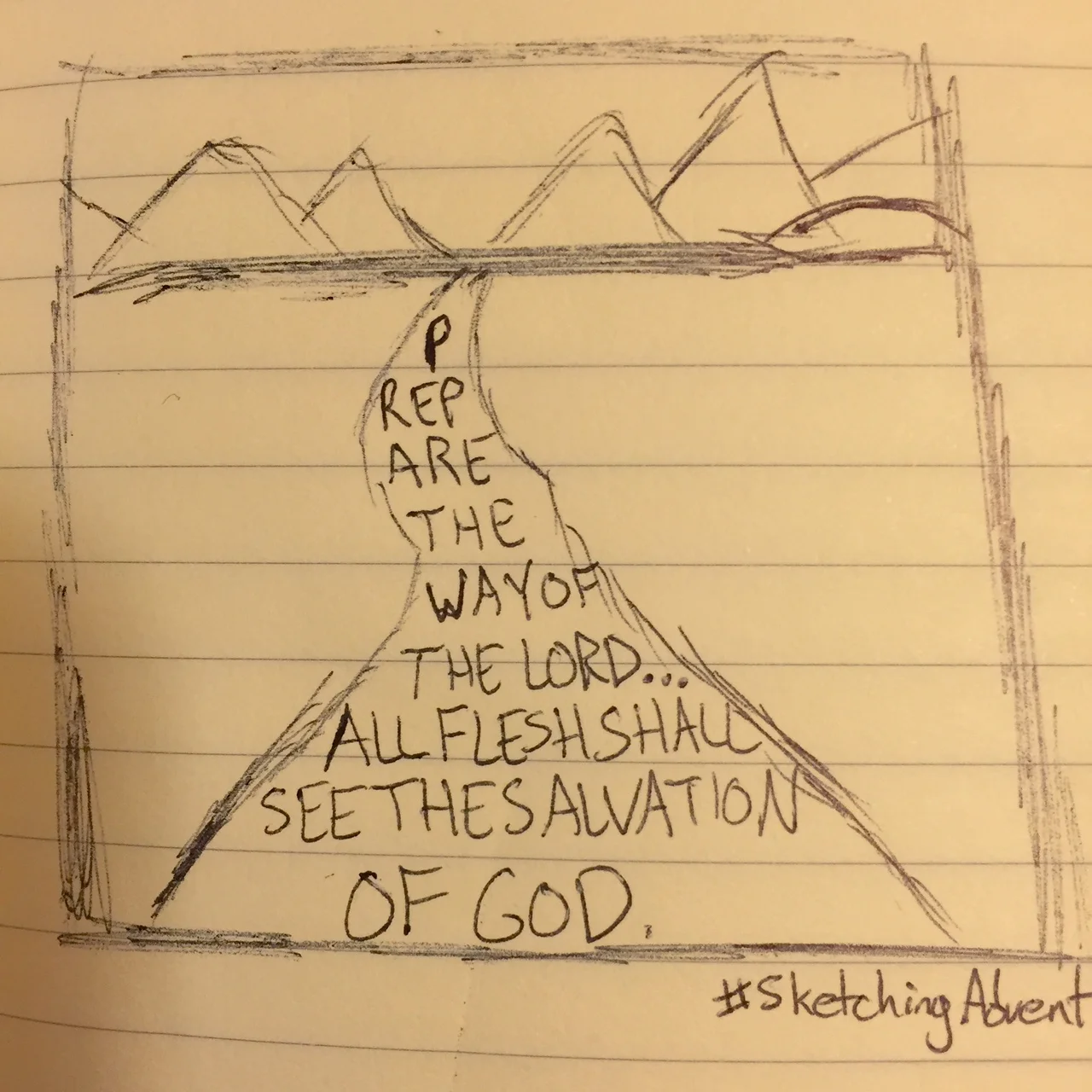
Goofy, I know, but that is what I see when I read John the Baptist talking about paths being made straight, mountains being laid low, and valleys filled. I see the world transforming before my eyes; everything is being turned upside down. It's dramatic upheaval befitting of widescreen cinema.
Of course, John was not talking about topographical cataclysm, but the paradigm shift that was coming was no less earth-shattering. The way was being prepared for God to walk among the people. The final line in today's lectionary boldly declares, "...and all flesh shall see the salvation of God."
In a world wrecked by tragedy, that is beautiful, life-sustaining news. It is peace that we need to hear spoken.
So the very simple question is how can the way for God be prepared in our own lives this Advent and each day? What mountains must be made low? What rocky paths made smooth? And on the other end of the spectrum, what are the areas of our lives in which we need to be lifted up and fulfilled?
I believe that most of us experience an internal tug-of-war between the past and the future. In The Screwtape Letters, C.S. Lewis’ titular demon supervisor advises his underling Wormwood that one of best ways to keep a human from doing good is to keep them ping-ponging between those two times that are not the present. One keeps trying to recapture or reach towards moments that are mist. It can keep a person from doing something.
The quote above resonates with me because it harnesses the past and unfinished future into a catalyst that animates our present. We remember the life, death, and resurrection of Jesus because it means something today and compels us to presently work for the Good that is already here, but also not yet. We remember the hope and pain of the past to do something that help us take some sort of step each and every day. We realize that the hope which exists within the gospel story is not yet fully realized. Many people are still being left behind and forgotten. The realization, as the theologian Metz states, puts pressure and questions on the present.