Job 24:13-17
14 people dead. 17 injured. That is the human toll as of this writing of a mass shooting at a facility for the developmentally disabled in San Bernardino, California. Hashtags went up on Twitter. Thoughts and prayers were offered. There was anger and frustration. Surely we cannot just let this happen again and again.
In reading the news, it occurred to me that I probably couldn't tell you half of the mass shootings that have happened in this past year. Moments in which I read the news and gasped in horror have faded into a grotesque parade of deja vu.
God, this has to stop.
This, of course, is not just mass shootings. I could be writing about terror attacks, catastrophic earthquakes, children without food, countries torn apart by war, families broken, the powerful abusing the weak, and so on. It happens all year every year. And it never takes a break for Advent and Christmas.
God, this has to stop.
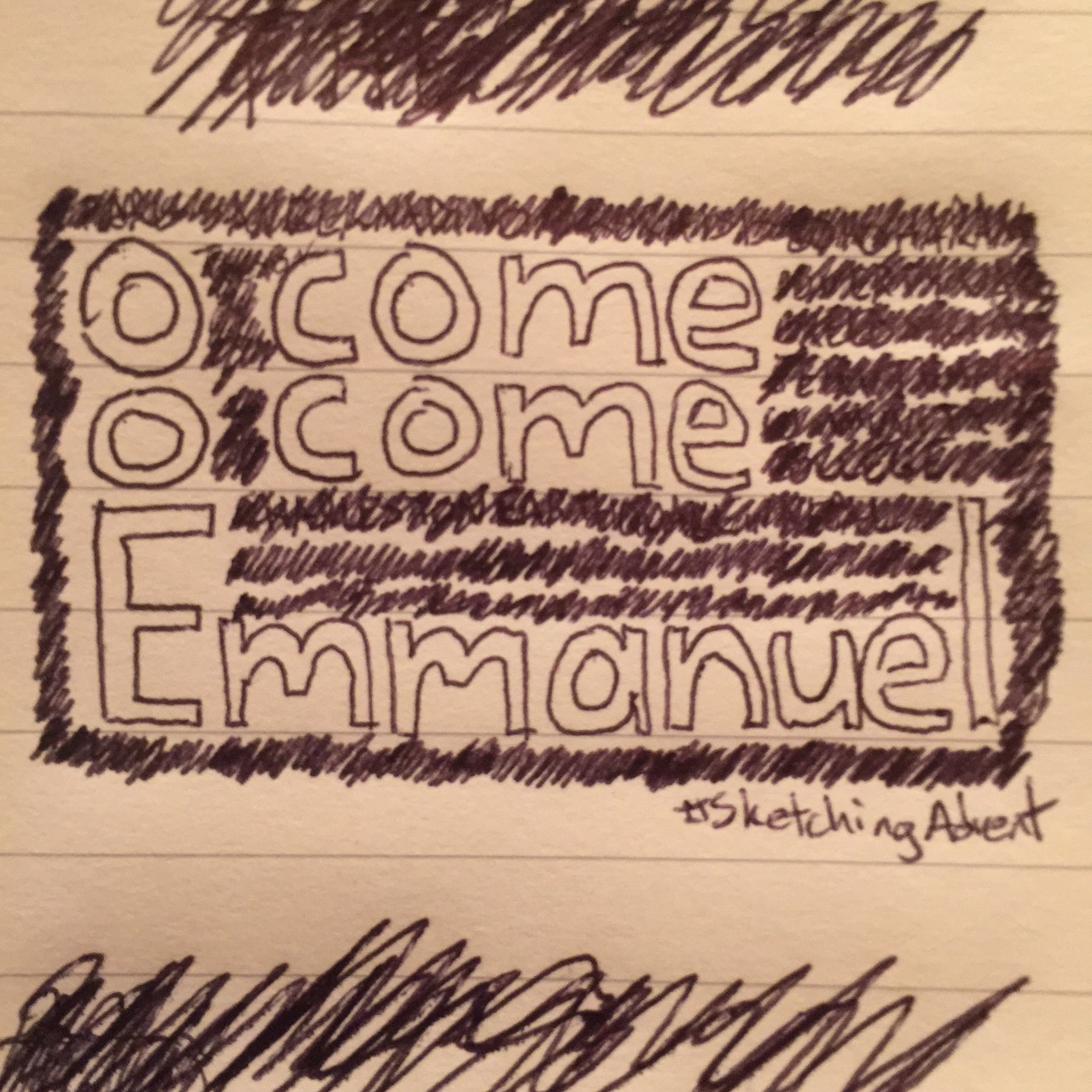
But that's the shadow implied by "O Come, O Come Emmanuel" isn't it? The quintessential Advent hymn which begs God to ransom captive Israel and to end strife is just a slightly nicer way of asking where exactly is God in this mess. "Rescue us" is another way of saying "Where are you?"
Perhaps Job is a good spokesperson for this dark reality of Advent. I read the news and think we might need a little more Job, a little more anger in our Advent. In Job 24, the titular character points out the seemingly unchecked violence on earth. There are murderers and thieves who wreak havoc leaving a swath of destruction in their wake. Good people, God's people, end up hurt. Where is God in all of that?
Job's friends never gave a good answer. Their conception of God was that of a being who was high above things here on earth. God is with us is what the name Emmanuel answers. And the good news of the Christmas story is that God does come to save the day. So God will come to save the day.
And yet that name: God with us. It muddies the waters. Jesus told his followers that he would be with them to the very end. "O Come, O Come Emmanuel" seems to perfectly capture the mindset before Jesus was born, but what about the present time that Advent also acknowledges? Is God still with us?
I believe God is with us. Yet the fullness of God has not yet arrived. It is that the simultaneous states of the already and the not yet. It's a complicated yet ever-present paradox. It is why we can honestly sing "O Come, O Come Emmanuel" even after God has come to us and God is with us.
Yet I wonder: If God is with us then what are we doing? We certainly cannot fix everything. I believe we're too broken for that. But when we say, "God, this has to stop," I suspect God would say, "Absolutely. Come join me." Does God sing a variation of this quintessential Advent hymn to us? Does God ask us to come and help rescue the captives? When people end up hurt then where are we in all of that?
I believe that most of us experience an internal tug-of-war between the past and the future. In The Screwtape Letters, C.S. Lewis’ titular demon supervisor advises his underling Wormwood that one of best ways to keep a human from doing good is to keep them ping-ponging between those two times that are not the present. One keeps trying to recapture or reach towards moments that are mist. It can keep a person from doing something.
The quote above resonates with me because it harnesses the past and unfinished future into a catalyst that animates our present. We remember the life, death, and resurrection of Jesus because it means something today and compels us to presently work for the Good that is already here, but also not yet. We remember the hope and pain of the past to do something that help us take some sort of step each and every day. We realize that the hope which exists within the gospel story is not yet fully realized. Many people are still being left behind and forgotten. The realization, as the theologian Metz states, puts pressure and questions on the present.