

Psalm 70
My favorite singer in the world is my Mom (my second favorite would be my little sister; I'll freely admit my bias). She is the first person I remember singing. I can hear her voice clearly in my head. I simply love to hear Mom sing.
For several years, Mom sang the song "Breath of Heaven" for a Christmas dinner theater production. It's a beautiful song sung from the perspective of Mary as she wrestles with the doubts and fears of carrying Jesus. I remember Mom on several occasions suggesting that someone else sing the song since she was not in the same age range in which scholars believe Mary was. It is perhaps the only time I'm glad we didn't listen to her.
There is a sequence in the song in which Mary, seemingly at the end of her rope, prays:
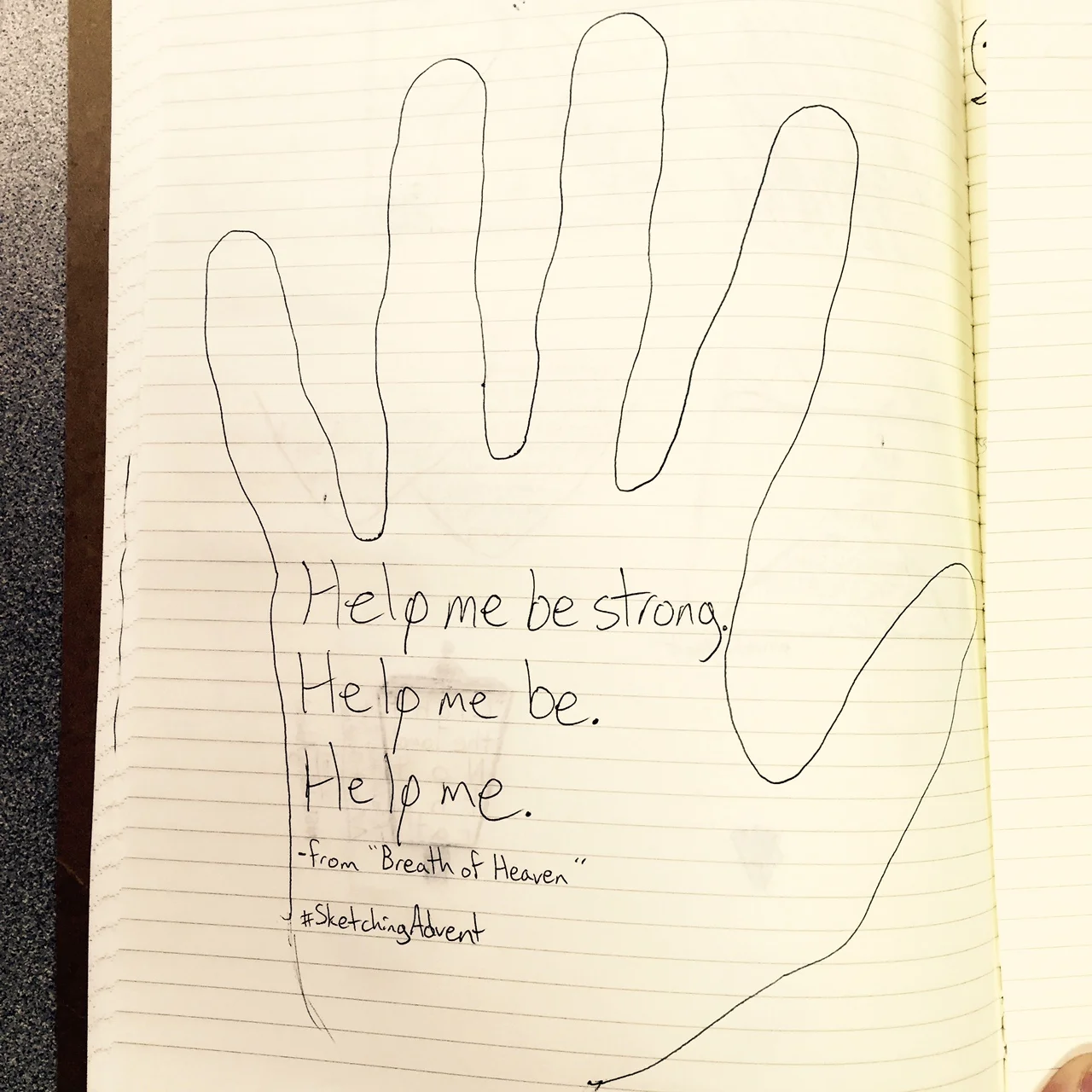
Help me be strong.
Help me be.
Help me.
When I hear my Mom sing that, it absolutely destroys me. It's a prayer that resonates deeply with me. Because I want to be strong so that I may be the person that God has made me to be. And then sometimes I need the help to be human. And sometimes I just need help.
I believe we all experience those moments. Those moments are scattered throughout scripture and especially in the Psalms. They are moments when the writers are at the end of their rope and cry out to God for salvation. I believe we often think that faithfulness comes from the place of great strength. More often than not, trust in God comes from a place of utter brokenness.
God, help us be strong.
Help us be.
Help us.
I believe that most of us experience an internal tug-of-war between the past and the future. In The Screwtape Letters, C.S. Lewis’ titular demon supervisor advises his underling Wormwood that one of best ways to keep a human from doing good is to keep them ping-ponging between those two times that are not the present. One keeps trying to recapture or reach towards moments that are mist. It can keep a person from doing something.
The quote above resonates with me because it harnesses the past and unfinished future into a catalyst that animates our present. We remember the life, death, and resurrection of Jesus because it means something today and compels us to presently work for the Good that is already here, but also not yet. We remember the hope and pain of the past to do something that help us take some sort of step each and every day. We realize that the hope which exists within the gospel story is not yet fully realized. Many people are still being left behind and forgotten. The realization, as the theologian Metz states, puts pressure and questions on the present.