

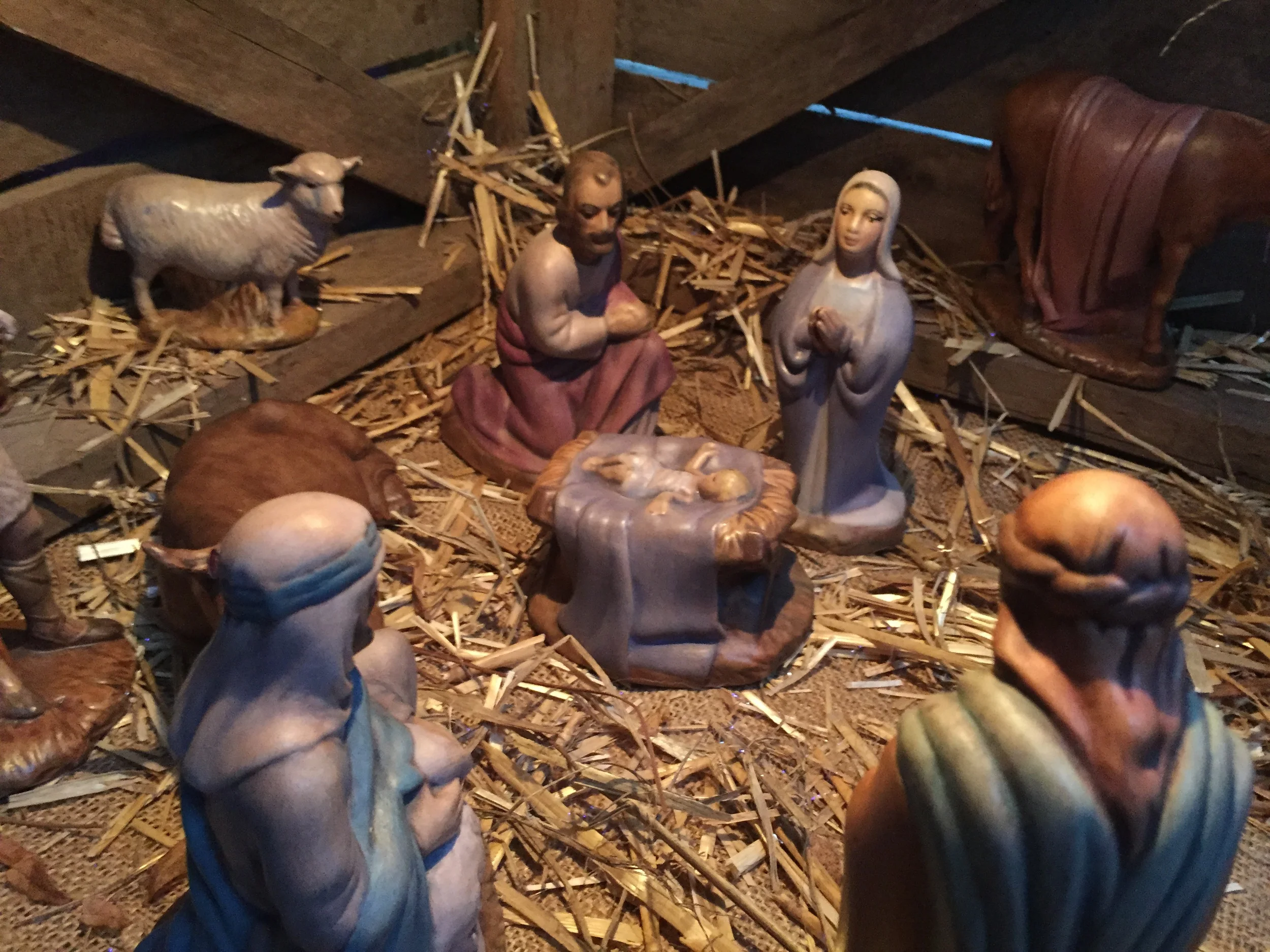
Luke starts with an elderly couple. He works hard to convince us that these two are the embodiment of what God desires from people. He is a priest. She is a descendent of Aaron. We are told that they are righteous. Yet they are barren. It's an old story. Abraham and Sarah. Hannah the mother of Samuel. A messenger from God comes to tell Zechariah that Elizabeth will bear a child. We know how this tale will turn out. This child is going to be a big deal; likely the hero of the story.
And the child will be a big deal. Yet a greater child is around the corner; born of God and a poor, young girl who believes where the wise, righteous priest faltered.
Out of the gate, Luke sends a very clear message that embodies the gospels as a whole: You think you know how this story is going to go. Think again.
That is something that we lose with hindsight. We take it for granted. We think God's plan to save the world is so obvious; that it must be all over the Old Testament in flashing neon lights you couldn't possibly miss. Yet the reality is this story is completely and utterly ridiculous.
This is a story in which the all-powerful creator of life becomes a finite and fragile human being. More than becoming a human being, for it would be one thing to take on the form of an adult, God became a baby. God became us at our most vulnerable. An infant can do nothing to care for his or herself. An infant has to be nursed, cleaned, changed, loved, and comforted. God willingly became helpless. God trusted humans—who, mind you, do not have the best track record throughout scripture or history—to raise this child who was also the Savior of humanity.
The deeper we go, the more audacious the plan appears. The baby is born in some random place in a crowded town and placed in a feeding trough. The first guests to such a world-transforming event is a group of dirty, common shepherds. The circumstances of the baby's birth was shrouded in scandal. He grew up with some thinking he was an illegitimate child. Throughout it all, Luke mentions deified emperors, governors, and kings and states that this poor baby is going to be greater than all of those guys combined.
The story of the nativity is madness, but it is beautiful madness. The surprise of the story sets the stage for a tale in which good news is brought to the poor, captives are freed, the blind see, the lame walk, the outcasts are welcomed in, and the sinless Son of God saves the world by willingly facing execution and yet rises from the dead. The whole story flips upside down everything that we think we know about how God works. It disintegrates our notions of power and prestige. It inverts ideas about who is in and who is out.
The Christmas story truly is an unexpected and unbelievable tale. It shows us the great lengths to which our creative and ever-loving God will go for the sake of humanity. It reminds us that grace is so much bigger than we realize. We cannot lose that surprise. We cannot take it for granted. Let us approach the manger with awe, hope, wonder, gratitude, and humility. Let us worship the God who is full of surprises.
I have a new office in our home and one of the things I am enjoying is decorating the space. I have placed books, Lego sets, and Funko Pops on the shelves. My wall has photos of family, places that I have traveled, artwork my siblings have given me, diplomas, etc. Across from my desk on the wall, hangs a cross that we got from a church in Reykjavik and a small colorfully-painted tile depicting Assisi. On the floor beneath them is the one item in here that I haven’t yet put up: my certificate of ordination.
I was ordained as a minister ten years ago today. It was a step with which I struggled for awhile. My Baptist roots fostered in me a firm belief in the priesthood of all believers. If you say that you are a follower of Jesus, then you are a minister. So the hierarchy implied by being called “Reverend” made me feel a little uncomfortable. I did not use the title for myself often unless I was writing my Congressperson. Despite these qualms, I did ultimately pursue ordination. I am glad that I did. I am just not totally sure what to make of it now.
I don’t serve as a vocational minister anymore; not in a church, not as a chaplain, not in some sort of parachurch organization. I am an Administrative Assistant in a hospital Spiritual Care department. In fact, I haven’t even attended a church service in maybe a year and a half save an Ash Wednesday service that I snuck off to at the beginning of Lent. I did officiate a wedding in a church over the summer; an experience that I loved and was very meaningful for me. But I don’t really know what to do about that ordination certificate. Or church.